
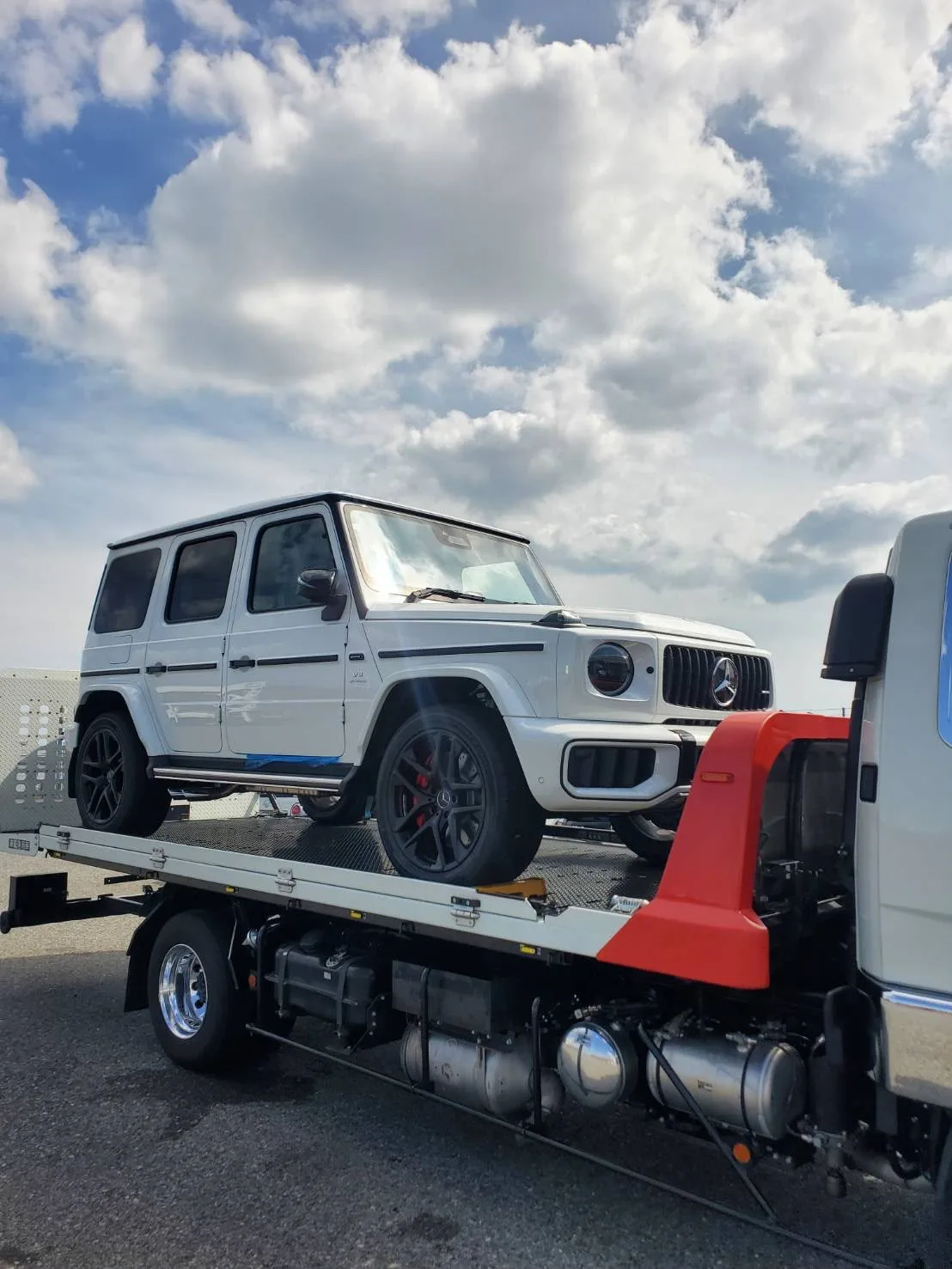
If you have been quoted a higher freight rate this year and told it is because new international rules restrict how electric vehicles are carried at sea, the rules being described do not exist yet. The SOLAS amendments that entered into force on 1 January 2026 cover fire detection, video monitoring and water-based suppression on vehicle decks. They say nothing about electric vehicles. IMO regulation specific to electric vehicles is still being drafted, and is expected to enter into force on 1 January 2032 at the earliest.
The short version
- The 2026 amendments are IMO resolutions MSC.550(108), amending SOLAS Regulation II-2/20, and MSC.555(108), amending the FSS Code chapters 7 and 9.
- They apply to ships with a keel laid on or after 1 January 2026, and to existing ro-ro passenger ships by the first survey on or after 1 January 2028.
- The requirements are fire detection and alarm, video monitoring, and fixed water-based extinguishing on weather decks. Lloyd’s Register’s summary of the amendments makes no mention of electric vehicles.
- Mandatory IMO regulation specific to electric vehicles is still at the drafting stage. Riviera Maritime Media reported on 8 April 2026 that any agreed SOLAS amendments are expected to enter into force on 1 January 2032 at the earliest.
- Car-carrier freight is genuinely expensive right now. The reason is capacity and volume, not a 2026 rulebook.
What actually entered into force in January
Two IMO resolutions took effect. MSC.550(108) amended SOLAS Regulation II-2/20, which governs the protection of vehicle, special category and ro-ro spaces. MSC.555(108) amended chapters 7 and 9 of the Fire Safety Systems Code.
The substance is infrastructure on the ship. Individually identifiable fixed fire detection and alarm systems in ro-ro, vehicle and special category spaces. Effective video monitoring for continuous observation of those spaces. A fixed water-based fire-extinguishing system on weather decks intended for carrying vehicles.
1 Jan 2026
New-build keel-laid date
1 Jan 2028
Existing ro-ro pax ships, first survey
0
Mentions of electric vehicles
The amendments address detection, monitoring and suppression infrastructure. They do not address what is parked on the deck.
The claim, and why it is wrong
The version circulating in freight marketing goes roughly like this: from 2026, updated fire protection regulations apply to ro-ro vessels carrying electric vehicles; the rules require upgraded suppression, improved ventilation and in some cases restricted deck placement for EVs; some vessels therefore carry fewer vehicles per voyage.
Three separate things are wrong with that. The amendments are not EV-specific. They do not impose deck-placement restrictions by powertrain. And they apply to new-build ships by keel-laying date rather than to the existing fleet immediately — which is precisely the fleet carrying your car this year.
Fire risk on car carriers is real. That is a different claim.
Nothing here says electric vehicles pose no fire risk at sea, or that the IMO is ignoring it. The IMO is actively working on it — a correspondence group runs to sub-committee SSE 13 in March 2027, and any resulting SOLAS amendments are expected in force on 1 January 2032 at the earliest. The false claim is that this work already binds the ship carrying your car and already justifies your surcharge.
1 January 2026
FSS Code amendments enter into force
MSC.550(108) and MSC.555(108) apply to cargo ships and ro-ro passenger ships with a keel laid on or after this date. Detection, monitoring and weather-deck suppression.1 January 2028
Existing ro-ro passenger ships must comply
Retrofit requirements — heat detectors, video monitoring, fixed water-based suppression on weather decks — apply not later than the first survey on or after this date.March 2027, then 1 January 2032
The electric-vehicle work, and when it could bind
A correspondence group reports to sub-committee SSE 13 in March 2027. Any SOLAS amendments arising are expected to enter into force on 1 January 2032 at the earliest.
So why is car freight expensive?
Because there are not enough ships, and there is more to carry. The pure car and truck carrier fleet was running close to capacity before Chinese vehicle exports scaled, and newbuild deliveries did not arrive fast enough to absorb the extra volume. That is a supply-and-demand story with a shipbuilding lead time attached, and it does not need a regulatory explanation.
It is also why the regulatory explanation is attractive to whoever is quoting you. “Rates are up because the market is tight” invites you to shop around. “Rates are up because international law changed” does not.
| Explanation offered | Status |
|---|---|
| New 2026 IMO rules restrict EV carriage | Not supported. The amendments are not EV-specific. |
| New 2026 rules apply to the ship carrying my car | Only if its keel was laid on or after 1 January 2026. |
| Ships carry fewer cars because of EV spacing rules | Not established by the 2026 amendments. |
| Car-carrier capacity is tight and rates are high | Supported by market reporting. |
| EV fire risk is under active IMO consideration | Correct — with regulation expected from 2032 at the earliest. |
Assessed against Lloyd's Register's summary of MSC.550(108) and MSC.555(108) and IMO reporting. Checked 10 September 2026.
Does this apply to you?
It applies to anyone paying for ocean freight on a car this year, which is every reader of this publication. It applies most directly if you have been given a line-item surcharge attributed to EV regulations, and it applies whether your car is electric or not — the claim has been used to justify general rate increases.
What to ask your forwarder
- “Which resolution?” A real regulatory surcharge can name the instrument. MSC.550(108) and MSC.555(108) are the 2026 ones, and neither is EV-specific.
- “When was this vessel’s keel laid?” If it predates 1 January 2026 and it is not a ro-ro passenger ship at survey, the new-build requirements do not bind it.
- “Is this a market rate or a compliance cost?” Both are legitimate answers. Only one of them is negotiable, which is why it matters which you are being charged.
- Get the all-in figure, not the components. A quote that arrives as a base rate plus five surcharges is harder to compare than one number, and that is usually the point.
On the record
- MSC.550(108) amends SOLAS II-2/20; MSC.555(108) amends FSS Code chapters 7 and 9; both in force from 1 January 2026.
- Application is to ships with keel laid on or after 1 January 2026, and existing ro-ro passenger ships by first survey on or after 1 January 2028.
- Lloyd’s Register’s summary of the amendments contains no provisions relating to electric or alternative-fuel vehicles.
- EV-specific IMO regulation is expected in force on 1 January 2032 at the earliest, per Riviera Maritime Media, 8 April 2026.
Still not established
- Whether any individual carrier has adopted stricter voluntary EV stowage practices. Some may have; that is a commercial decision, not a regulation.
- How much of the current freight level is attributable to capacity versus route disruption versus fuel. We have not seen a reliable decomposition.
- The final content of any SOLAS amendments arising from the correspondence group reporting to SSE 13 in March 2027.
Move now or wait?
If freight out of South East Asia is what concerns you, the real pressure is in the volume rather than the rulebook — our read on Thailand’s tightening export book covers what is actually moving through Laem Chabang this year.
Freight is not on a regulatory cliff edge, so there is no rule-driven reason to rush a shipment this year. There is one genuine deadline in the near term, and it has nothing to do with electric vehicles: existing ro-ro passenger ships have to comply with the 2026 fire-safety amendments by their first survey on or after 1 January 2028. The electric-vehicle rules sit four years behind that again, expected on 1 January 2032 at the earliest. Neither is a reason to move a shipment this year.
Which means the honest advice is dull. Book on the merits of the car and the currency, and treat a 2026 regulatory surcharge as a line to question rather than a cost to accept.
Maritime regulation is set by the International Maritime Organization and implemented through flag states and classification societies. Details above reflect Lloyd’s Register’s published summary of MSC.550(108) and MSC.555(108) and IMO reporting, checked on 10 September 2026. Confirm any vessel-specific requirement with your carrier or classification society.
Want the freight line explained rather than bundled?
We quote one landed figure covering the car, freight, marine insurance, duty and local tax where it applies — itemised, so you can see which line is which. Send us a specification and a destination port and we will build it: start here. Our cost-to-import guide sets out every component of the bill.
Sources
- Class News 07/2026: SOLAS amendments — Fire Safety Requirements for ro-ro Passenger Ships — Lloyd's Register
- EV fire risks draw IMO's attention — Riviera Maritime Media
- Summary of new IMO requirements coming into force in 2026 — Indian Register of Shipping
- RoRo Shipping in 2026: Why Vehicle Shipping Capacity Is Tight — TransGlobal