
Importing a car to Ireland can save you thousands — or quietly cost you thousands — depending on three taxes, where the car was built, and which model you choose. This guide pulls the whole picture together: what you pay, where to buy, and the cars that land cheapest in 2026.
The short version
- The cost is three stacked charges: customs duty, VAT and VRT. Understanding how they interact is the entire game.
- Since 1 February 2026, Japanese-built cars enter at 0% customs duty — the same as UK-built cars.
- VRT swings from 7% to 41% of the car’s Irish value based on CO₂, so a low-emission model is your biggest lever.
- The value sweet spot is a 3–8 year-old, low-emission, right-hand-drive car bought below Irish retail.
The three taxes that decide everything
Every imported vehicle must be registered in Ireland within 30 days of arrival, with an NCTS inspection booked within 7 days. Tax is assessed at that point, and the total is the sum of three charges applied in order — each calculated on the running total of the one before it:
- Customs duty — 0% or 10% of the landed (CIF) value, decided by where the car was built.
- VAT — 23% of the landed value plus any duty.
- VRT — 7% to 41% of the Irish Open Market Selling Price (OMSP), driven by CO₂ emissions, plus a separate NOx levy.
Customs duty: 0% or 10%
Customs duty applies to cars entering Ireland from outside the EU customs union — which, since Brexit, includes Great Britain. The decisive factor is the country of manufacture, not where you bought the car.
| Where the car was built / bought | Customs duty |
|---|---|
| Built in Japan, with a statement of origin | 0% (EU–Japan EPA) |
| Built in the UK, imported from GB (proof of origin) | 0% (EU–UK TCA) |
| Built in the EU but bought in Great Britain | 10% |
| Built elsewhere (Korea, USA…), from a non-EU country | 10% |
| Imported from another EU member state | 0% (single market) |
The most expensive mistake
A BMW or VW bought in Britain was built in Germany — it pays the full 10%. A Toyota bought in Britain but built in Japan can claim 0% only with a valid Statement of Origin. Without documentary proof, Revenue charges 10% by default. See Japan vs the UK for how this plays out in practice.
VAT at 23%
Irish VAT is 23%, charged on the customs value plus any duty already added. It always applies to non-EU imports (Japan, and Great Britain since Brexit), regardless of the car’s age or mileage.
There is one exception worth knowing: a genuinely used car from the EU or Northern Ireland is VAT-free — but only if it is more than 6 months old and has more than 6,000 km. Under either threshold, it counts as a “new means of transport” and 23% applies anyway.
VRT — the controllable cost
Vehicle Registration Tax is the largest and most controllable charge. It’s calculated as (CO₂ rate % × OMSP) + NOx levy, where OMSP is Revenue’s own estimate of the car’s Irish retail price — not the price you paid abroad. The CO₂ rate runs across 20 bands:
7%
Battery EV / PHEV (0–50 g/km)
~12%
Efficient hybrid (~95–110 g/km)
41%
High-emission car (over 190 g/km)
On a €25,000 OMSP, a 95 g/km hybrid pays about €3,000 VRT; a 145 g/km diesel SUV pays about €5,375; a 195 g/km performance car pays €10,250 plus the heaviest NOx levy. Same value, but emissions alone move the bill by €7,000+. We break the maths down fully in VRT explained.
Where to import from
Five source countries are commonly considered. In 2026 only two are genuinely worth it for most buyers:
| Country | Duty (locally-built car) | Shipping | Verdict |
|---|---|---|---|
| Japan | 0% (EPA, since Feb 2026) | €1,000–2,000, 6–10 wks | Strongest value source |
| United Kingdom | 0% if UK-built, else 10% | €250–700 ferry, days | Best logistics; tax depends on origin |
| India | 10% (FTA not yet at 0%) | €1,500–2,500, 5–8 wks | Weak — few suitable models |
| Australia | 10% | €2,500–4,500, 6–10 wks | Niche only |
| New Zealand | 10% | €2,500–4,500, 6–10 wks | Classics / enthusiast only |
Japan and the UK are right-hand drive (no conversion needed) and now share the same 0% duty for locally-built cars. India, Australia and New Zealand offer no 0% car duty today and long, costly shipping — treat them as niche-only. Compare Japan vs the UK in detail →
The best cars to import
The ideal import qualifies for 0% duty, has low CO₂ to keep VRT down, favours petrol/hybrid over diesel (to avoid the NOx levy), is right-hand drive, and has a real price gap to Irish retail. That points squarely at Japanese-built hybrids and efficient petrols:
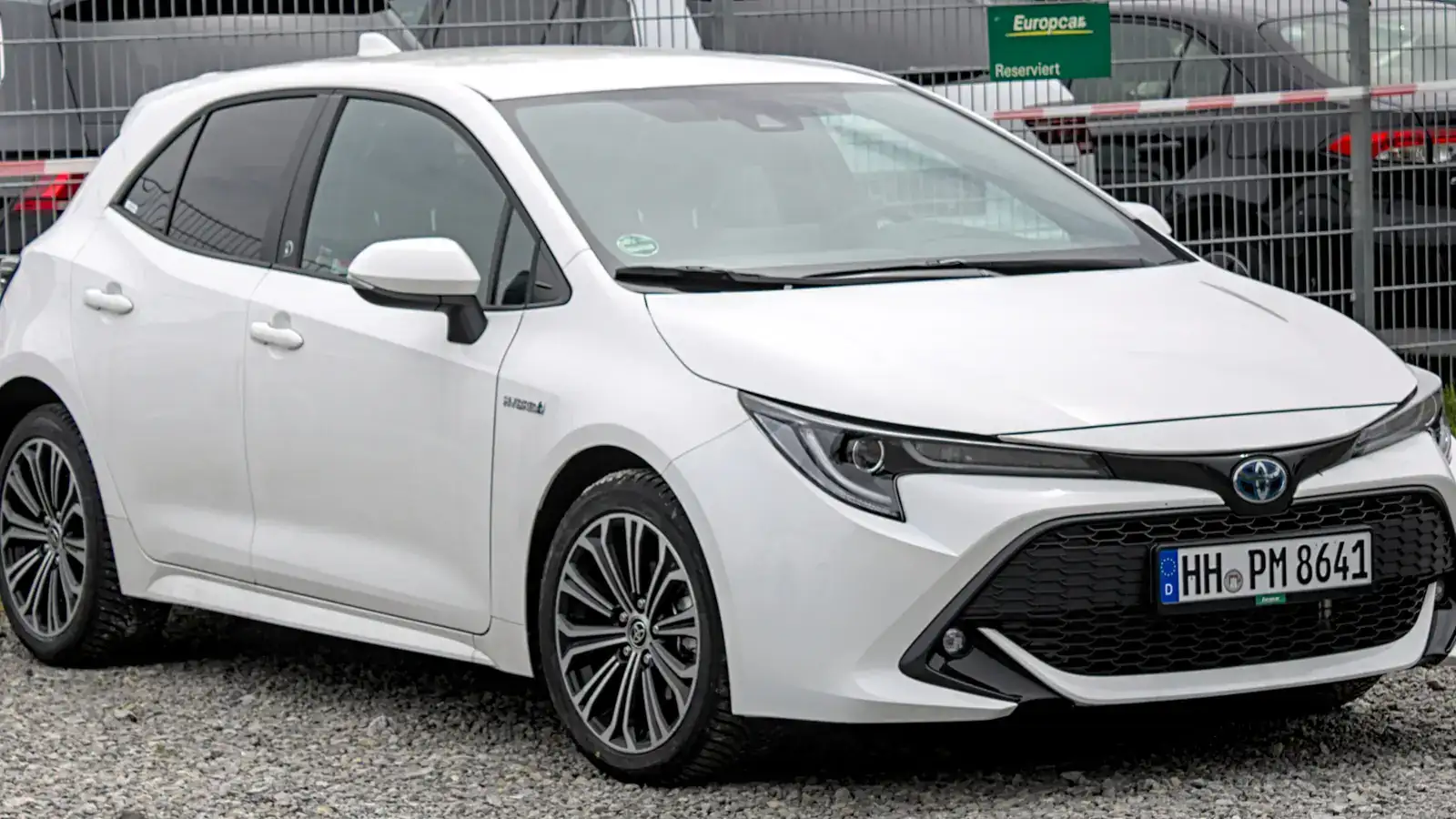
- Toyota Aqua / Prius / Corolla hybrid — very low CO₂, abundant at auction, strong Irish resale.
- Honda Fit / Jazz hybrid — small, efficient, cheap at source.
- Nissan Note e-Power / Leaf — lowest CO₂ bands; the Leaf EV also captures the VRT relief before end-2026.
- Suzuki Swift / kei cars — low value + low CO₂ = very low VRT.
For the full ranked list with landed-cost numbers, see the cheapest cars to import to Ireland.
Free · No commitment
Not sure which car works for you?
Tell us your budget and how you'll use the car. We'll suggest the models that land cheapest after all Irish taxes — and quote the exact total before you commit.
The age & mileage sweet spot
Brand new is usually the worst value: the highest OMSP (so the highest VRT), the full “new means of transport” VAT from the EU, and the steepest year-one depreciation. The consistent winner is a 3–8 year-old car with average (not ultra-low) mileage:
- The first owner has absorbed the worst depreciation, so OMSP — and VRT — are moderate.
- It’s comfortably clear of the 6-month / 6,000 km VAT trap.
- Cars from ~2019 onward usually have genuine WLTP CO₂ data, avoiding the NEDC-conversion penalty.
Counter-intuitively, very low mileage can raise your VRT — Revenue assigns a higher OMSP to a low-mileage car. The genuine value play is average mileage with documented good condition, which Japan’s auction grading makes easy to find.
The import process, step by step
With a service like Providence, the process is hands-off, but it helps to know the shape of it:
- Source — confirm the car, its condition grade and origin documents before any money moves.
- Ship — RoRo to an Irish port (6–10 weeks from Japan; days by ferry from the UK), fully insured.
- Clear — customs declaration, then VRT assessment and payment at the NCTS.
- Register — Irish plates, road-legal, ready to collect.
Before you do any of this, model the full landed cost. Run your exact car through our Ireland car import cost calculator — or read how much it really costs and the cheapest way to do it.
Figures are indicative and for guidance only. Actual VRT is charged on Revenue’s OMSP and varies by model, year and mileage. Always confirm current rates and your specific case with Revenue.ie before committing to a purchase.