
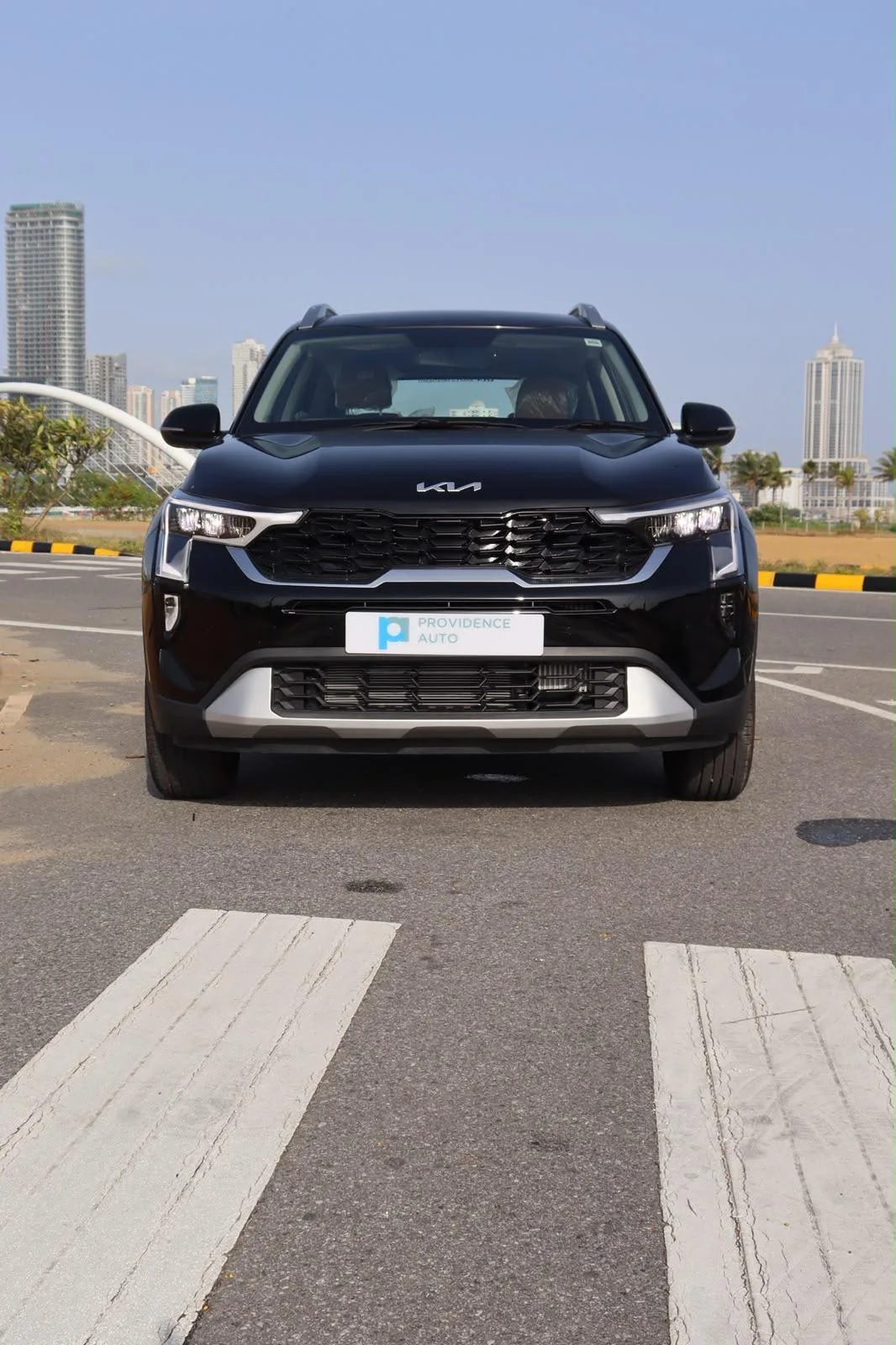
Kia launched the Sorento in India on 4 September 2026 from ₹27.99 lakh ex-showroom, running to ₹40.39 lakh at the top. It is a seven-seat, ladder-adjacent flagship with a strong hybrid and a diesel, and the detail that matters for anyone outside India is at the bottom of the release: production has started at Kia’s Anantapur plant in Andhra Pradesh. This is an India-built, right-hand-drive, three-row SUV.
The short version
- India launch 4 September 2026, priced ₹27.99 lakh to ₹40.39 lakhex-showroom.
- Strong hybrid: 1.6-litre turbo petrol rated 180 PS and 265 Nm, with a 65 PS, 264 Nm motor. Kia India has not published a combined system output. With all-wheel drive available.
- Diesel: 2.2-litre turbo, 193 PS and 442 Nm.
- Built at Anantapur, Andhra Pradesh — the plant that already supplies Kia’s Indian range.
- Ex-showroom is not on-road. Indian registration, road tax and insurance sit on top, and an export price is a different basis again.
What Kia launched
₹27.99 lakh
Starting price, ex-showroom
180+65 PS
Hybrid engine plus motor
193 PS
2.2 diesel, 442 Nm
| Strong hybrid | Diesel | |
|---|---|---|
| Engine | 1.6-litre turbo petrol with hybrid system | 2.2-litre turbo diesel |
| Output | 180 PS engine + 65 PS motor | 193 PS |
| Torque | 265 Nm engine + 264 Nm motor | 442 Nm |
| Drivetrain | All-wheel drive available | As specified per variant |
| Seating | Six and seven-seat layouts | Six and seven-seat layouts |
India-specification figures as reported at launch on 4 September 2026. Checked 10 September 2026.
Kia describes the Sorento as its new flagship internal-combustion model in India, and the all-wheel-drive hybrid is the variant carrying the marketing weight. For an importer, the diesel is the more interesting half of the range: 442 Nm from a 2.2 in a seven-seat body is the specification that sells into East Africa, the Caribbean and the Pacific, and diesel parts and service depth in those markets is genuinely better than hybrid parts and service depth.
The hybrid is the headline. The diesel is the export case.
Why Anantapur matters
India has quietly become one of the most useful right-hand-drive sourcing bases in the world, because it builds volume vehicles in right-hand drive as standard, at Indian cost bases, for a domestic market large enough that a plant does not need exports to justify itself. Kia’s Anantapur facility has been supplying that market since 2019.
A three-row SUV built there is exactly the kind of vehicle that historically had to come out of Japan or Korea at a Japanese or Korean price. Our guide to why Indian-manufactured cars cost less sets out where that difference actually comes from — and it is not specification.
Indian domestic launch is not an export programme
Production at an Indian plant does not by itself mean the car is available for export, in what specification, or on what timetable. Manufacturers allocate export volume separately from domestic volume. Before quoting a customer a Sorento out of India, confirm the actual channel rather than inferring one from the plant address.
What does the price mean in your money?
Indian ex-showroom prices include GST but exclude registration, road tax and insurance, so they are not an on-road figure and they are certainly not an export figure. The conversion below is provided so a non-Indian reader can size the vehicle against their own market, not as a landed cost.
The India range, converted
ECB euro reference rate of 110.8225 rupees, 9 September 2026
Add ocean freight, marine cover, your own duty, your own consumption tax and any registration tax, and the landed figure moves substantially. In Ireland it would meet VRT on Revenue’s own valuation; in Kenya an assessed value derived from a published schedule; in Sri Lanka an excise band set by engine capacity. The rupee price is the starting point of that calculation and not the end of it.
Can you import one?
- It is right-hand drive. Built for India, so every right-hand-drive destination clears that criterion.
- As a new car, age bars do not apply. The limits that govern used imports into Kenya, Sri Lanka and the Caribbean are not the issue with a 2026 vehicle.
- Emissions certification is the question to settle first. An Indian-market car carries BS6 homologation. Whether your destination accepts it, or requires its own certification, is country-specific and slower to resolve than shipping.
- Hybrid systems need a parts answer, not just a price. Before committing to the hybrid in a market with a thin Kia service network, establish where the battery and the hybrid control unit come from and how long they take.
The dealer read
India-built three-row SUVs land into Africa, the Caribbean and South Asia at a price point that Japanese and Korean equivalents struggle to reach, and that is the whole argument. The counter-argument is residual: the Indian-built segment does not yet have a long depreciation history in most of those markets, and a young brand-plus-origin combination carries a risk premium. Saying so is more useful than forecasting a residual we cannot evidence.
On the record
- India launch on 4 September 2026 at ₹27.99 lakh to ₹40.39 lakh ex-showroom.
- 1.6-litre turbo strong hybrid: a 180 PS, 265 Nm engine with a 65 PS, 264 Nm motor. All-wheel drive is offered.
- 2.2-litre turbo diesel producing 193 PS and 442 Nm.
- Production commenced at Kia’s Anantapur facility.
Still not established
- Whether the Sorento is allocated for export from India, to which markets, and in what specification. We have not seen an export programme announced.
- Variant-by-variant drivetrain availability. Reporting indicates all-wheel drive on the hybrid; we have not verified the full variant matrix.
- Warranty treatment for a unit exported outside the manufacturer's own distribution network.
Move now or wait?
For most readers, wait. A car launched six days ago has no used market, no residual history and no export allocation anybody has confirmed. The useful work now is the homologation question for your destination, which is slow and which you can start without owning anything.
For a dealer in a market where Kia has a distributor, the better first call is to that distributor rather than to an exporter. If the car is coming to your market through official channels, importing it privately is usually the more expensive way to get the same vehicle with a worse warranty.
Prices and specifications are as reported for the Indian market at launch and are subject to change. Exchange rate cited is the European Central Bank euro reference rate for 9 September 2026. Import admissibility, emissions certification and tax treatment vary by destination — confirm with the relevant authority before committing funds.
Pricing an India-built SUV into your market?
We source from Indian dealer networks and quote one landed figure to your port, with the documentation prepared and explained. Send us the model, variant and destination: start here. Our India cost guide breaks the bill down line by line.
Sources
- India-spec Kia Sorento revealed ahead of September 4 launch — Autocar India
- Upcoming car launches in September 2026 — Autocar India
- Kia Sorento Launched In India At Rs 27.99 Lakh: Diesel, Hybrid And AWD On Offer — Motoroids
- Euro foreign exchange reference rates — European Central Bank