
India’s roughly 30% price advantage is created in the factory and lost, if it is lost, at the destination port. Whether it survives the journey depends almost entirely on how your country charges duty — and that is knowable in advance. Here is every line, and the three things that decide whether the saving arrives with the car.
The short version
- Where duty is a percentage of value, the advantage survives intact.
- Where duty is charged on engine capacity or a fixed schedule, it compresses.
- Freight is a larger share on a cheap car — consolidate where you can.
- Never under-declare the invoice. It is fraud, and the penalty lands at your own border.
How the total is built
Four blocks. The unusual thing about India is the proportions:
- The car. Lower than the network average — that is the whole point — which makes every other line proportionally larger.
- India-side costs. Modest: inspection, inland transport, documentation, clearance.
- Freight and insurance. A bigger share than you would expect, precisely because the car is cheap.
- Destination duty and tax. The variable that decides whether this was worth doing.
Costs inside India
- Purchase price — new through the dealer network, or used where budget requires it.
- Independent multi-point inspection, including specification verification against your order.
- Inland transport to Nhava Sheva, Chennai, Mundra or Kolkata. India is large, so this varies with where the vehicle was sourced.
- Export documentation — invoice, shipping bill, chassis verification, customs clearance.
- Pre-shipment inspection where your destination mandates an accredited one.
Freight and insurance
India’s sailings are short to the Gulf and Sri Lanka, moderate to East and West Africa, and long to Europe and Latin America. In absolute terms none of it is expensive — but relative to a low vehicle price, it is a bigger slice of the bill than it would be on a luxury import.
The consolidation arithmetic
On a cheap car, freight can be a fifth of the landed cost. Loading two or three vehicles into a single container instead of shipping them individually changes that materially, which is why multi-unit orders from India improve per-unit economics more than they do from anywhere else in our network.
Marine insurance should cover replacement value door to port. It is a small line and there is no sensible reason to decline it.
Where the advantage gets eaten
Three mechanisms, and it is worth knowing which one applies to you before you choose a car:
- Ad valorem duty is friendly. If duty is a percentage of value, a cheaper car pays proportionally less duty. The 30% advantage passes through almost undiminished. This is the good case.
- Capacity-banded excise is neutral to hostile. If tax is set by engine size rather than value, an India-built car pays the same as an expensive one with the same engine — so the saving compresses. Choosing a smaller engine matters more than choosing a cheaper car.
- Fixed or minimum-value assessments are hostile. Some regimes assess against reference values rather than your invoice, which can erase a low purchase price entirely. This is the case where India may simply be the wrong source.
We model which mechanism applies before recommending India over another source — because occasionally the honest answer is that it does not suit your market.
How to keep the saving
- Choose for the tax band, not the sticker. In a capacity-banded market, the engine you pick moves the total more than the model you pick.
- Consolidate freight wherever the volume allows.
- Buy new where the gap to used is small. You capture the manufacturing advantage cleanly and avoid used-condition risk in a market where history is harder to verify.
- Get the documentation right. Port storage from an inconsistent invoice can wipe out a chunk of the saving in a fortnight.
- Never under-declare. Under-invoicing to reduce duty is fraud, it is routinely detected by authorities tracking market values, and the penalty lands at your border rather than in India.
A worked example
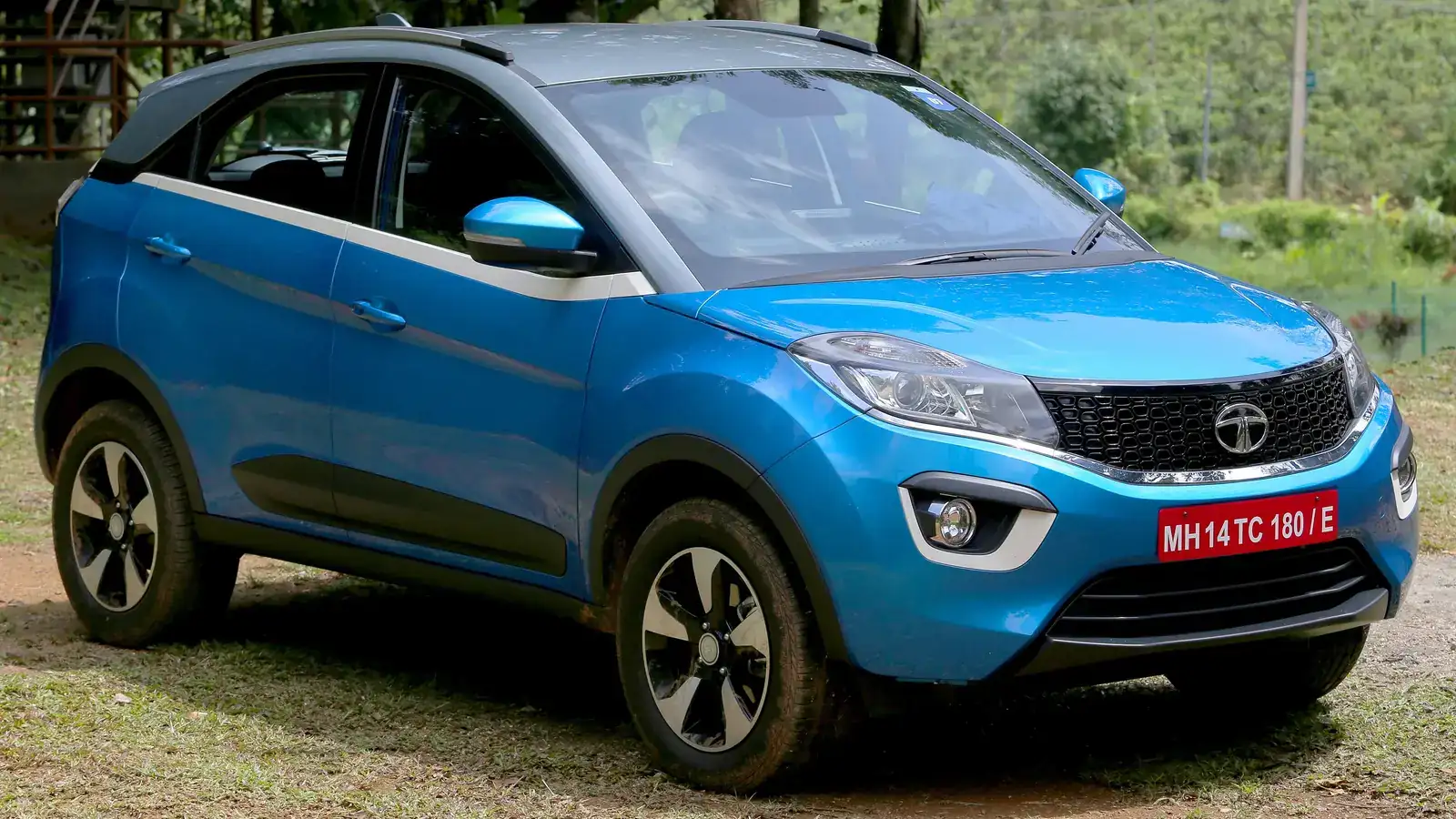
Illustrative structure for a new compact SUV, containerised, to a mid-distance destination with ad valorem duty. Proportions, not a quote:
New India-built compact SUV, shared container
Illustrative structure — proportions, not a quote
Compare the shape with a UAE import, where the car is 60% of the total and freight is smaller. Different problems, different levers — which is why the useful comparison is always landed cost for the same requirement across source countries, not headline vehicle price.
For dealers running volume, the consolidation and cashflow arithmetic is developed further in our dealer guide.
Percentages above are illustrative of structure only and are not a quote. Duty, excise and registration charges depend entirely on your destination and the specific vehicle, and rates change. Confirm current rates with your national customs authority before committing.