
Japan will sell you almost anything. That is the problem — the catalogue is so deep that the question stops being “what is available?” and becomes “what is actually worth crossing an ocean for?” The answer depends on three things: how much the car costs at auction, how much your country charges to let it in, and whether anyone near you can service it. Here is where those three line up.
The short version
- Cheapest to land: small hybrids — Aqua, Fit hybrid, Note e-Power.
- Best value nobody else offers: the Alphard and Vellfire luxury MPVs.
- Strongest resale anywhere: Land Cruiser, in every generation.
- The trap: a rare model with no local parts supply is a cheap car with an expensive future.
What makes a good import
Three filters, applied in this order. First, auction price relative to your local market: cars that are ordinary in Japan and unusual where you live carry the biggest arbitrage. Second, how your country’s tax regime treats it — engine capacity, emissions and age bands can move the landed figure more than the purchase price does. Third, and most neglected, parts and service availability at your end.
That third filter is what separates a good import from a clever-looking mistake. A car nobody local can service is not a bargain, however little you paid for it.
Cheapest to land: the hybrids
Japan buys small hybrids in the numbers other countries buy superminis, which makes them ordinary — and ordinary is cheap. They are also compact enough to keep freight modest and efficient enough to sit in the lowest emissions band of most tax regimes. For a buyer whose main objective is the lowest possible landed cost, this is the category.
- Toyota Aqua. The default answer. Cheap at auction, genuinely frugal, and so widely sold across South Asia and Africa that parts and specialist knowledge are everywhere.
- Toyota Prius. Roomier, proven to very high mileage, and the drivetrain the whole hybrid industry learned from. Taxi fleets run these to numbers that would frighten most engines.
- Honda Fit / Jazz hybrid. The best packaging in the class — a genuinely useful boot inside a very small car.
- Nissan Note e-Power. A petrol engine that only generates electricity, so it drives like an EV without needing a charger. Underrated, and cheap.
Family: the MPVs Europe never got
This is Japan’s most distinctive export category, because there is no substitute. Japanese manufacturers build luxury and family MPVs to a standard and a specification that were simply never offered in Europe, and buyers who discover them rarely go back to a seven-seat SUV.
Toyota Alphard and Vellfire
Captain’s chairs, hybrid drivetrains, near-silent cabins and enough rear-seat space to work in. In markets where executive transport means a long-wheelbase German saloon, an Alphard does the job better for substantially less money — which is why they have become the default chauffeur vehicle across much of Asia and are spreading fast elsewhere.
Toyota Noah, Voxy and Esquire
Eight seats, sliding doors, a flat floor and hybrid options, in a footprint smaller than most three-row SUVs. For a family that actually uses all the seats, these are more practical than anything sold new in Europe at twice the price.
The 4x4s worth crossing an ocean for
Japanese 4x4s hold value in almost every market on earth, and the reason is supply rather than sentiment: demand exceeds what any local market can produce.
- Toyota Land Cruiser — 70, 200 and 300 Series. The most reliably re-sellable vehicle in this entire article. Japanese examples set the global benchmark for condition because of how they are maintained.
- Land Cruiser Prado. The same durability in a smaller, cheaper, more road-biased package. Enormously popular across Africa and South Asia.
- Toyota Harrier and Honda Vezel. Premium-feeling hybrid crossovers with running costs that make no sense for how substantial they feel. Consistently among our most-requested cars.
- Lexus LX and RX. Land Cruiser and Harrier engineering with a better cabin and a longer warranty history. Worth the premium if the specification is right.
Performance and modern classics
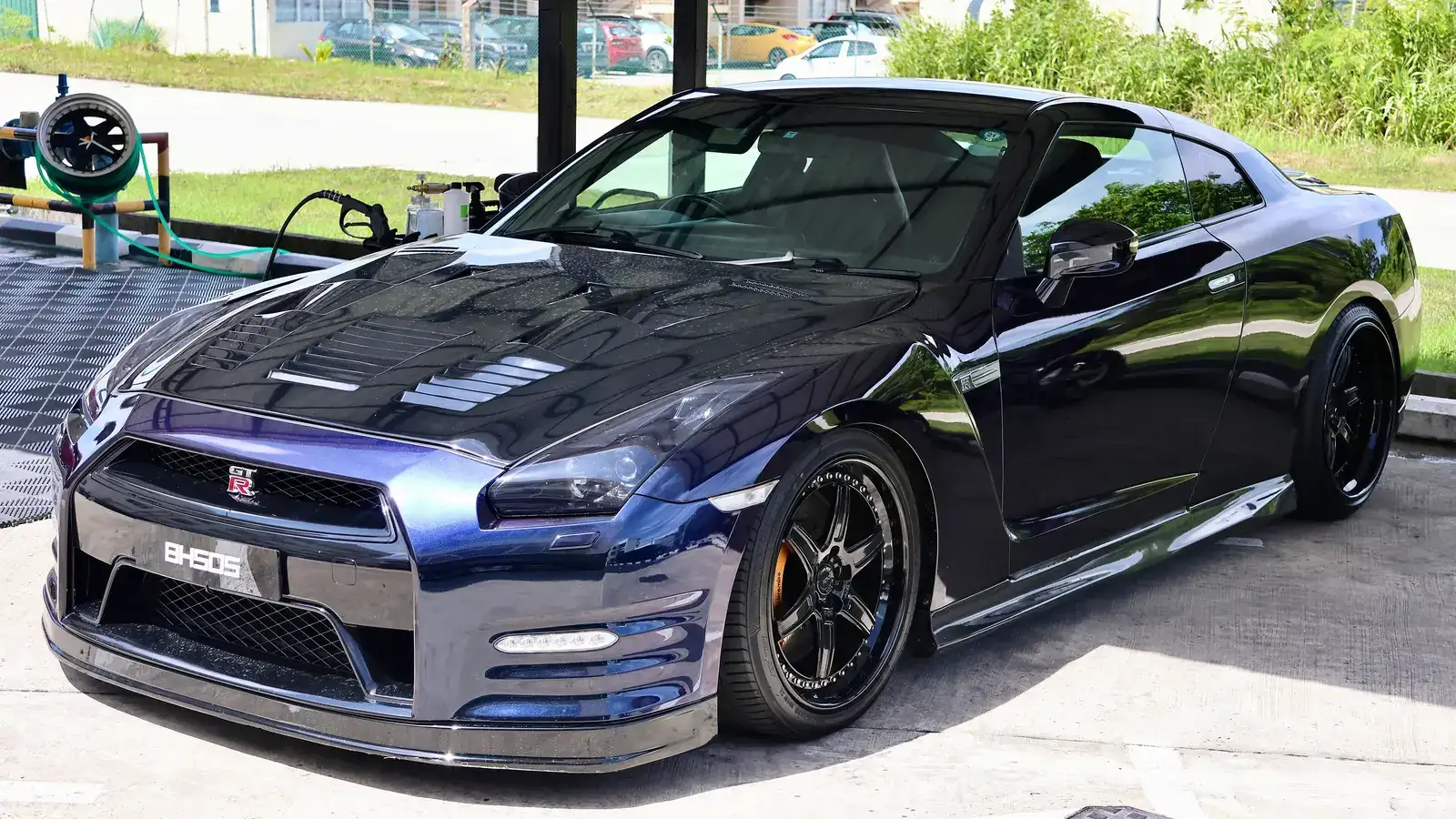
Japan imposes no age limit on what it exports, so the pool runs from last season’s model to cars now old enough to qualify for classic treatment in several markets. The famous names — GT-R, Supra, RX-7, Lancer Evolution, Impreza STI, NSX — all still surface at auction, and so do the kei sports cars that never officially left Japan.
Provenance is the whole game here
Performance cars are the most modified and most misrepresented category in the market. On these, the auction sheet, service history and a physical inspection are not optional extras — they are the difference between an appreciating asset and somebody else’s abandoned project. We do not buy a performance car without all three.
Vans and commercials
Less glamorous and frequently the best money in the whole catalogue. The Toyota Hiace is the most durable light commercial vehicle in wide circulation and holds value accordingly; the Toyota Probox and Succeed are the small commercial estates that quietly run half the small businesses in several countries. For fleet buyers, these are usually a stronger proposition than any passenger car.
The ones that flatter to deceive
- Anything genuinely rare in your market. If no local garage has seen one and no factor stocks the parts, a cheap purchase becomes an expensive ownership. This is the single most common import regret.
- Large-capacity petrol engines into capacity-taxed markets. A big V6 or V8 that is cheap at auction can attract more tax than the car costs. Check the band before you fall in love.
- Kei cars, outside a handful of markets. Charming, extremely cheap, and often not homologated for registration where you live. Confirm first.
- Very low-grade cars bought on price. Below Grade 3.5 you are buying somebody else’s deferred maintenance, and freight costs the same either way.
Once you have a shortlist, the next question is what each candidate will actually cost to land — the full cost breakdown is here. If you want to skip to the stock our Japan team is buying right now, that page lists it.
Model availability, auction pricing and destination tax treatment all change. Homologation and age-limit rules differ by country and can rule out specific models entirely — we confirm eligibility and model the landed cost for your destination before recommending a purchase.