
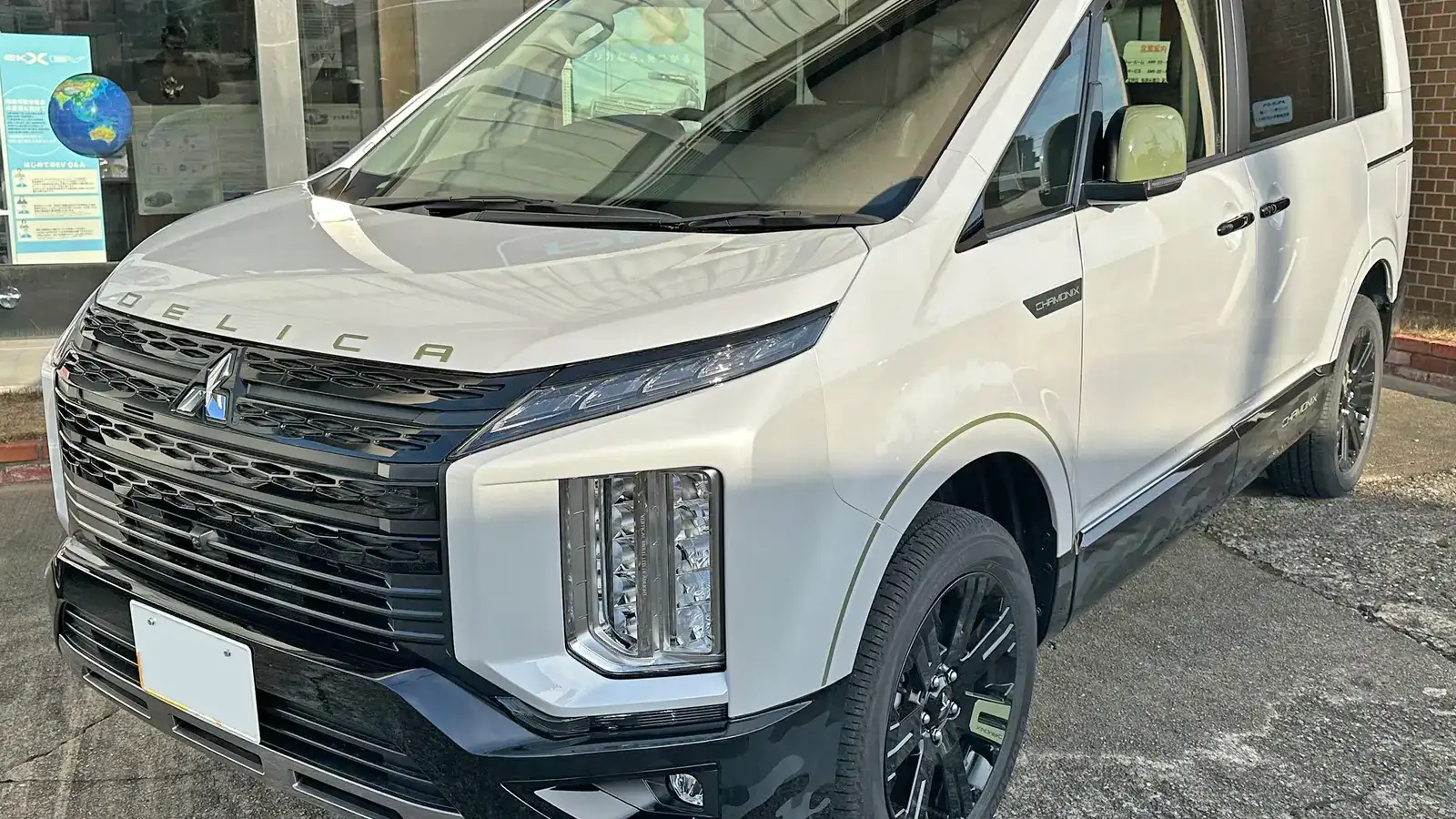
“You’ll never get parts for it” treats every Japanese import as the same car. They are not. At one end sit Japanese-market versions of cars Britain bought in large numbers, sharing their engines, brakes and filters with the car next door. At the other sit models no British dealer ever stocked. The parts question is real for the second group, and mostly a myth for the first.
The short version
- Parts availability depends on the model, not on the car being Japanese.
- A Japanese-market version of a UK-sold car shares much of its hardware — but trim and lights can differ.
- Japan-only models rely on UK specialists or parts shipped from Japan.
- Parts cost feeds straight into the insurance premium.
Can you get parts for a Japanese import in the UK?
For most popular models, yes. A Japanese-market version of a car sold in the UK shares much of its mechanical hardware, though Parkers notes that exterior trim and lights can differ. A model never sold here relies on UK specialists who stock popular Japanese models, or on parts shipped from Japan, which costs time and money.
Shared models and Japan-only models
| The car | Routine parts | Body, trim and lights | What to expect |
|---|---|---|---|
| Japanese version of a UK-sold model | Usually shared | May differ | Servicing at most garages; some body parts sourced specially |
| Popular Japan-only model with a UK following | From UK specialists | From specialists or Japan | A known supply chain; Parkers notes these can be cheaper to insure |
| Rare Japan-only model | Often from Japan | From Japan | Lead times; a specialist garage; a higher premium |
Parkers, 'Importing a car from Japan' (updated 25 March 2026); Cuvva on imported-car insurance (updated 15 August 2024). Accessed 7 October 2026.
What differs on a Japanese version of a shared model
Parkers lists exterior trim and lights among the subtle differences between a Japanese-market car and its British counterpart, and those are exactly the parts a minor accident replaces. Two other differences show up in ownership rather than in a parts catalogue:
- The radio. Parkers notes that analogue radios in Japanese-market cars often do not tune the full UK FM band, because Japan uses a different FM range. A frequency adaptor or a UK head unit fixes it.
- Language. The infotainment, the handbook and the service history are in Japanese. Translations exist, at a cost; the service history is worth translating, because it is evidence at resale.
Keeping a Japan-only car running in Britain
For a model never sold here, the supply chain is a specialist one: UK businesses that stock parts for popular Japanese models, and parts ordered from Japan for the rest. Cuvva makes the insurer’s version of the same point — parts that are harder and dearer to find, and a car that may need a specialist mechanic. None of that makes the car a bad buy. It makes the parts question one to answer before you import, along with the premium that follows from it, set out in insuring a Japanese import.
How to check parts before you import a Japanese car
- Get the model code, from the export certificate or auction sheet, not just the name. Parts are listed by code.
- Ask a UK specialist for prices on the parts a minor accident replaces: a headlamp, a bumper, a mirror.
- Check the consumables — filters, pads, belts — against the UK equivalent if there is one.
- Find the owners’ club. For a Japan-only model it is often the best map of who supplies what.
The car’s condition matters as much as its parts supply; that is covered in why Japanese imports are often in better condition. When you know the model you want, you can import a Japanese car to the UK with its model code and specification confirmed before you commit.
Parts availability varies by model and changes over time. This page reports the observations of Parkers (updated 25 March 2026) and Cuvva (updated 15 August 2024), accessed on 7 October 2026; it does not list or endorse any supplier. Check prices for your exact model code before you import.