
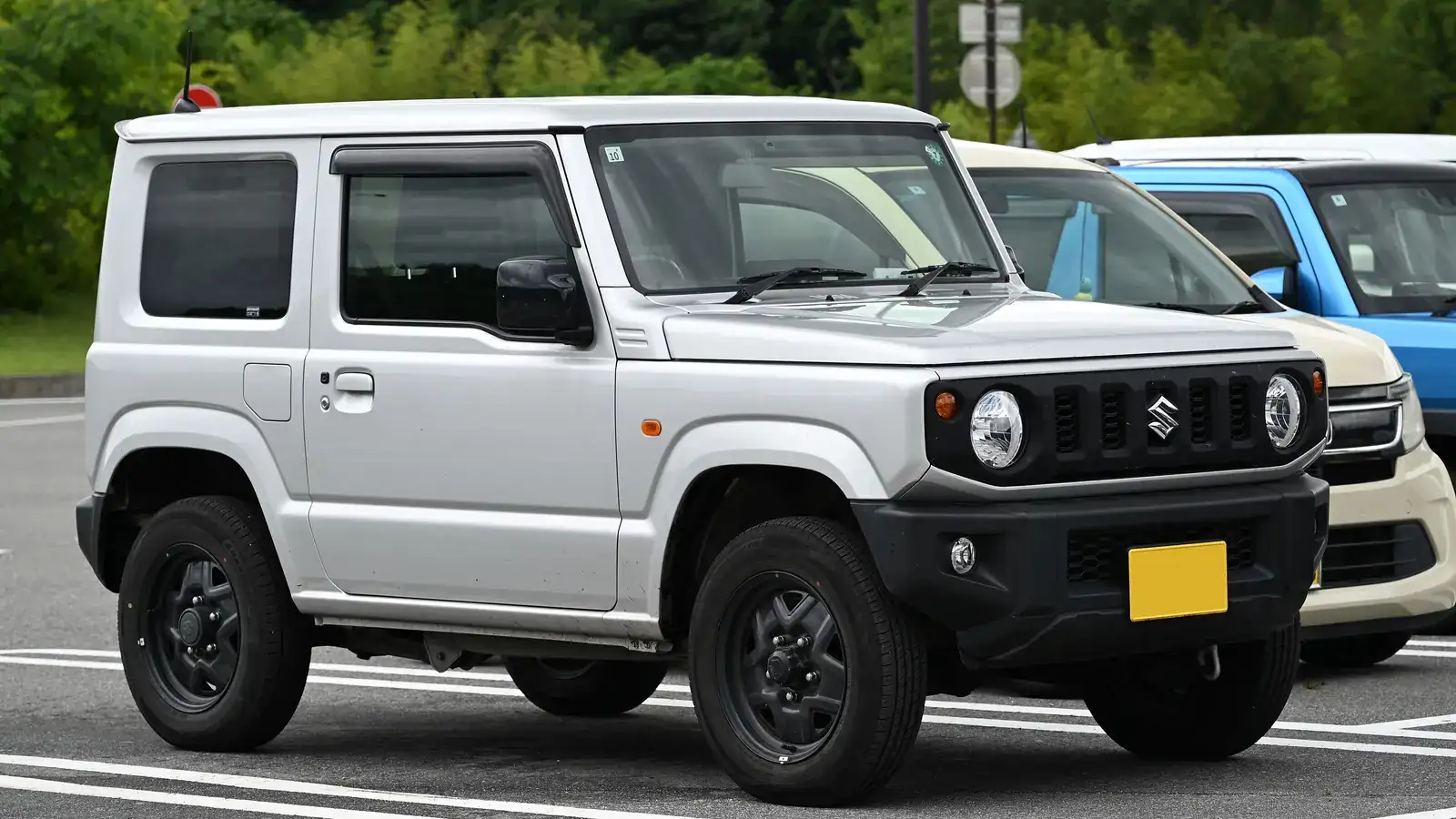
Japan sells three Jimnys and builds two of them. The kei Jimny and the Jimny Sierra come off Suzuki’s line at Kosai; the five-door Jimny Nomade arrives from India. Importing a Jimny from Japan is mostly a question of picking the right one of the three, then proving the car is what its paperwork says.
The short version
- The kei Jimny is Japan-only: a 0.66-litre turbo in a narrow body built to Japan’s kei-car rules. The Sierra is the 1.5-litre car the rest of the world knows as the Jimny.
- Suzuki’s Japanese list prices run from ¥1,918,400 for the Jimny XG to ¥2,385,900 for the Sierra JC, including 10% consumption tax (checked 15 October 2026).
- The Nomade is built in India, so a Nomade bought in Japan does not count as a Japanese-built car wherever duty depends on origin.
- Check modifications first. Lifted, re-tyred and re-bumpered Jimnys are common in Japan and can fail registration abroad.
- Snow-region cars need an underbody check. Chloride de-icing salt is spread across much of Japan.
Japan sells three Jimnys
Suzuki launched the current Jimny and Jimny Sierra on 5 July 2018 and built them at its Kosai plant — the first Jimny made there. The five-door Jimny Nomade followed on 3 April 2025, built by Maruti Suzuki in India.
| Jimny | Jimny Sierra | Jimny Nomade | |
|---|---|---|---|
| Chassis | JB64 | JB74 | JC74 |
| Engine | 0.66-litre R06A turbo | 1.5-litre K15B | 1.5-litre K15B |
| Doors / seats | 3 / 4 | 3 / 4 | 5 / 4 |
| Gearboxes | 5MT, 4AT | 5MT, 4AT | 5MT, 4AT |
| Built in | Japan | Japan | India |
Sources: Suzuki Motor Corporation releases of 5 July 2018 and 30 January 2025, and suzuki.co.jp model pages, checked 15 October 2026.
Kei Jimny or Jimny Sierra?
Buy the Sierra unless you specifically want the kei car. The kei Jimny is built to Japan’s light-vehicle class, with a narrow body and a three-cylinder turbo engine, and Suzuki sells it only in Japan. Its engine, track and many body parts are particular to it. The Sierra shares its 1.5-litre engine and wider body with the Jimny sold in other countries, which makes parts and workshop familiarity easier to find once the car has left Japan.
The kei car’s appeal is real: it is the lighter, narrower and cheaper of the two. Make it a deliberate choice rather than the one the auction list happened to show you.
What a Jimny costs in Japan
Suzuki’s manufacturer’s suggested retail prices, checked on suzuki.co.jp on 15 October 2026, include Japan’s 10% consumption tax and exclude recycling fees, registration costs and other taxes:
| Model and grade | Price including consumption tax |
|---|---|
| Jimny XG | ¥1,918,400 |
| Jimny XL | ¥2,046,000 |
| Jimny XC | ¥2,160,400 |
| Jimny Sierra JL | ¥2,271,500 |
| Jimny Sierra JC | ¥2,385,900 |
| Jimny Nomade FC (launch price, 5MT / 4AT) | ¥2,651,000 / ¥2,750,000 |
Suzuki Motor Corporation. The Nomade figures are from its 30 January 2025 launch release. Options, such as two-tone roofs and the display audio package, are extra.
A list price is a reference, not the price you pay for a used car. Used Jimnys trade on condition, mileage, colour and demand. Treat any used price as a quote for that car on that day, and convert it at the rate on the day you pay — not the rate on the day you first saw it.
Dealer or auction?
Both. Japan’s used-car dealers sell nationwide, and its auction houses grade every car they sell on a published scale. An auction sheet records the grade, the interior grade and a diagram of marks the inspector found. Our guide to Japanese auction grades explains what each grade means and what it leaves out, and our guide to buying a car at Japanese auction covers how bidding works for a buyer outside Japan.
When you have chosen the Jimny you want, you can import Japanese cars with the grade and the landed figure in front of you before you commit.
What to check on a used Jimny
Modifications
The Jimny is one of the most modified cars in Japan. Suspension lifts, larger tyres, steel bumpers, snorkels and roof racks are common, and Japan has its own process for registering structural changes. A change that is legal in Japan is not automatically legal where you live. In several markets a lift or oversized tyres means an engineering certificate or a failed registration. A stock car is the safer import; a modified one needs every change checked against your destination before you bid.
Corrosion
A paper from Japan’s National Institute for Land and Infrastructure Management records that about 60% of Japan’s land lies in snowy regions where chloride de-icing salts are spread. Most people do not live there, so many cars are clean underneath — but a Jimny is often bought for exactly those regions. The chassis rails, the axle housings and the rear crossmember are where to look.
Mileage
Japan’s inspection-registration records hold the odometer reading taken at each roadworthiness inspection (shaken), and flag the maximum recorded value where a reading ever went down. The export certificate carries a reference number that links the car to those records, so the mileage is evidence rather than a claim.
The drivetrain
Every current Jimny has part-time four-wheel drive with a low-range transfer. Confirm on inspection that the car selects four-wheel drive high and low, and look for oil on the axles and transfer case.
The Nomade is not a Japanese-built car
Suzuki sells the Nomade in Japan, but it is built in India and shipped to Japan — Maruti Suzuki lists Japan among the largest export markets for the five-door. Demand outran supply: Suzuki stopped taking Nomade orders days after its January 2025 announcement and reopened them on 30 January 2026, with delivery order decided by lottery.
Why the factory matters
Where your country charges a lower duty on cars originating in Japan, a Nomade does not qualify, because it was built in India. Where it charges a lower duty on Indian-originating cars, a Nomade that was registered and driven in Japan first is unlikely to qualify either. If you want a five-door, compare buying it in India.
The export paperwork
A used Jimny is deregistered for export in Japan, and the export certificate issued on deregistration is the document most destination registration authorities treat as the original foreign registration certificate. With it travel the purchase invoice, the bill of lading and any pre-shipment inspection your destination requires. Japanese export documents explained shows each one.
If your country gives a lower duty to Japanese-originating cars, the export certificate does not prove that. Origin is a separate claim, and for a used car it needs evidence about how the car was built.
Prices are Suzuki’s published Japanese list prices on the date stated and change without notice. Duty, tax, age limits and approval rules depend on your destination. Verify each with the relevant authority before committing.