
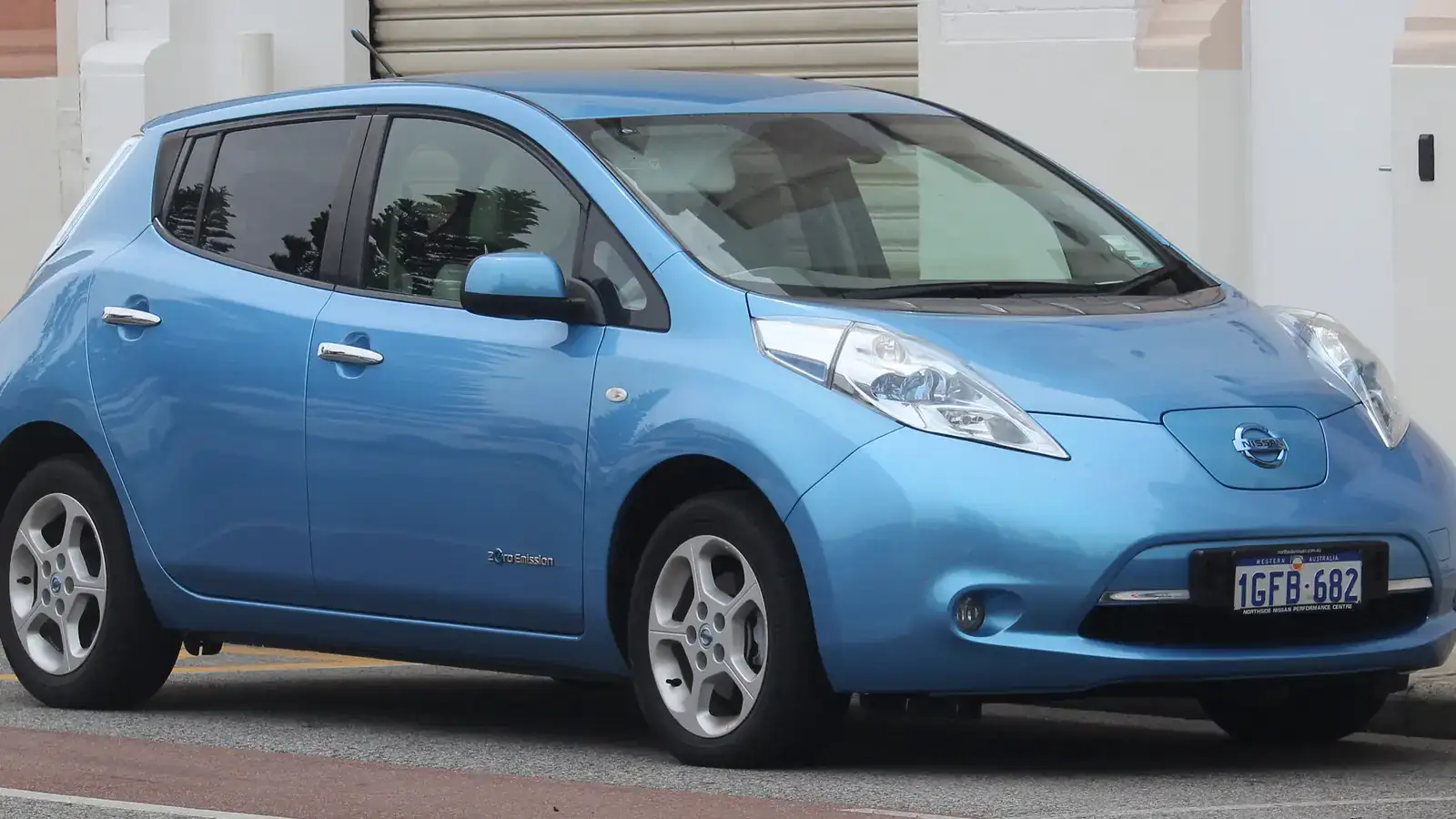
On a used electric car, the battery is most of the value and none of it is visible. Two identical-looking vehicles with similar mileage can be worth very different money, because one has 90% of its original capacity and the other has 65%. Everything else about buying a used EV is secondary — and, unlike the battery, obvious.
The short version
- State of health is the number. Never buy a used EV without a measured reading.
- Degradation depends on age, chemistry, climate and charging habits, not just mileage.
- Check the charging standard against your local network before buying.
- Reliable home charging changes the calculation completely.
Why New Zealand for a used EV
Because supply exists. Most markets that want used electric vehicles do not have any — electrification is recent, and a used market takes a decade to form. New Zealand absorbed used Nissan Leafs and plug-in hybrids from Japan over more than ten years on top of strong local uptake, which produced genuine depth: enough stock to be selective rather than grateful.
The secondary benefit is the same one that applies to all New Zealand stock — entry certification, English documentation and a local service record. Details in how to import a car from New Zealand.
State of health: the only number that matters
Battery state of health is the pack’s remaining usable capacity expressed as a percentage of its original capacity. It determines the car’s real range, its resale value, and whether it is a sensible purchase at all.
It matters this much because of what replacement costs. On many used EVs, a new battery pack costs more than the vehicle is worth — which means a car with a badly degraded pack is not a cheap EV, it is a car with a terminal condition and a deceptively low price.
| State of health | What it means | Verdict |
|---|---|---|
| 90%+ | Minimal degradation. Range close to original. | Excellent. Priced accordingly, and worth it. |
| 80–90% | Normal degradation for age. Noticeable but manageable range loss. | The typical good used EV. Fine for most buyers. |
| 70–80% | Significant loss. Real-world range materially reduced. | Only at a price that reflects it, and only for short-range use. |
| Below 70% | Heavy degradation, often accelerating. | We do not export these. The economics do not work. |
Bands are indicative — the acceptable figure depends on the original battery capacity, since 80% of a large pack is more usable range than 90% of a small one.
Our rule
We will not export an electric or plug-in hybrid vehicle without a measured state-of-health reading, and the reading goes to you before payment is released. A seller who cannot or will not provide one is asking you to buy the single most expensive component in the car unseen.
How batteries actually degrade
Mileage is a poor predictor, which is why the odometer is the wrong thing to look at on an EV. Degradation is driven by:
- Calendar age. Cells degrade over time whether or not the car is driven. A low-mileage ten-year-old EV is still a ten-year-old battery.
- Chemistry and thermal management. Some packs are actively cooled and some are not, and it makes a large difference over a decade.
- Climate. Sustained heat is the enemy. New Zealand’s temperate climate is genuinely favourable here — a real advantage over hot-climate used EVs.
- Fast-charging frequency. Regular DC fast charging accelerates degradation relative to slower AC charging.
- Charge habits. Routinely charging to 100% and running to near empty is harder on a pack than staying in the middle of the range.
The practical consequence: two same-year, same-mileage cars can differ by fifteen percentage points of capacity. Ignore the brochure range figure entirely, read the measured state of health, and calculate real-world range from that.
Charging standards and compatibility
The second thing that can make a used EV import a mistake, and it is entirely checkable in advance.
Older Japanese-origin electric vehicles — which describes a large share of New Zealand’s used stock — commonly use the CHAdeMO fast-charging standard, while much of the world has standardised on CCS. If your local fast-charging network is CCS only, a CHAdeMO car is limited to slower AC charging. Adapters exist but are not universally supported and not always sanctioned.
Before buying, establish three things about your own market:
- Which fast-charging standard your public network actually uses.
- What AC connector your home supply and public chargers use.
- Whether the vehicle’s onboard systems — navigation, telematics, charging apps — function outside their home market. Frequently they partly do not, which is an annoyance rather than a dealbreaker.
Can your market support the car?
Worth asking plainly, because enthusiasm outruns infrastructure regularly. An imported used EV needs:
- Reliable charging you control. Home charging changes the calculation completely; depending entirely on public infrastructure is a much bigger assumption.
- Somebody locally who can work on it. High-voltage systems need trained technicians, and not every market has them for every brand.
- A realistic view of range. Measured state of health, applied to the original capacity, in your climate, on your journeys.
- Registration eligibility. Some markets treat imported EVs differently for duty or type approval — occasionally favourably.
If reliable home charging is not available, a plug-in hybrid such as the Outlander PHEV is frequently the better import: electric for short journeys, petrol for everything else, and no range anxiety attached to a degraded pack.
The pre-purchase checklist
- Measured battery state of health, documented
- Original battery capacity, to convert that into real range
- Fast-charging standard, checked against your local network
- AC connector type and home-charging plan
- Entry-certification and registration history
- Any battery module replacement history
- Local high-voltage service availability for the brand
- Destination registration and duty treatment for EVs
We check all eight before recommending a vehicle. For the wider market, see the best cars to import from New Zealand, or what our New Zealand team is sourcing.
State-of-health bands above are indicative and depend on original pack capacity and intended use. Charging standards, adapter legality and EV duty treatment vary by market and change. Confirm charging compatibility and registration eligibility for your specific vehicle and destination before committing.