
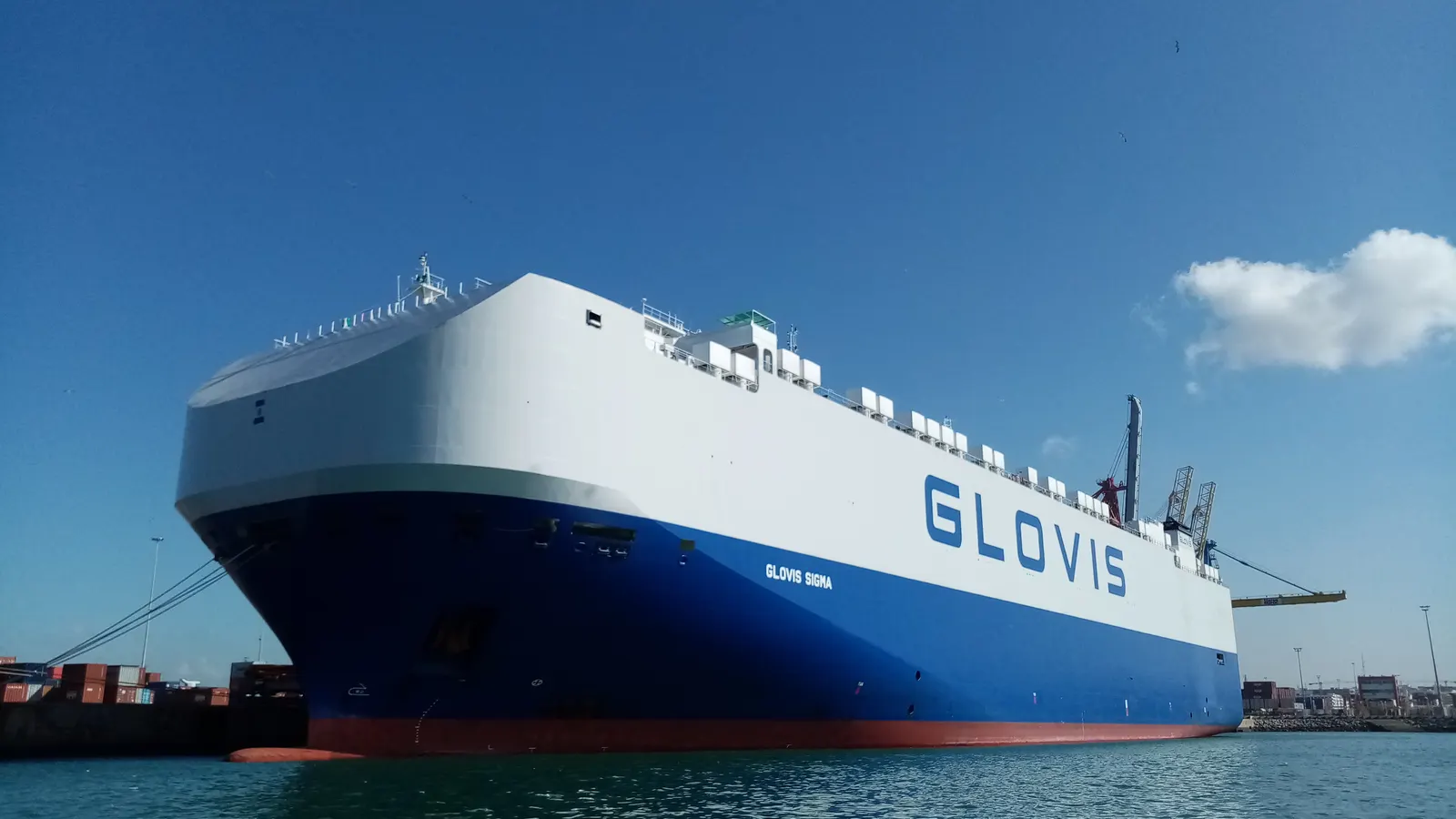
A car crosses an ocean in one of two ways: driven onto a vehicle carrier and parked on one of its decks, or loaded into a shipping container and carried as sealed cargo. Neither is better in general. Each suits different cars, routes and batch sizes.
The short version
- RoRo (roll-on/roll-off) suits running cars on routes with regular vehicle-carrier sailings.
- Containers suit batches, non-runners, valuable cars and routes vehicle carriers rarely serve.
- Loose items inside a RoRo car are usually not allowed; container contents must be declared.
- Compare quotes on the same terms: port pair, terminal charges and insurance basis.
RoRo or container, in one paragraph
For one or two running cars on a well-served route, RoRo is usually the simpler option: the car is driven aboard at the loading port and driven off at yours. For several cars shipped together, a car that does not run, or a car you want sealed in for the voyage, a container is usually the better fit. Whichever you choose, the freight is only one line in the landed cost.
How roll-on/roll-off shipping works
Vehicle carriers — pure car carriers and pure car and truck carriers — are built with many internal decks connected by ramps. Cars are driven aboard by stevedores, lashed to the deck, and driven off at the destination. The car is handled by people at each end, which is why it must run, and why carriers commonly ask for it to be empty of personal effects and loose cargo.
- The car needs to start, steer and brake.
- Keys travel with the car and are handed over at each terminal.
- The car shares the deck with many others, so it is exposed to handling.
How container shipping works
In a container, the car is driven or winched in, chocked and strapped, and the doors are sealed. The container travels on an ordinary container ship and is opened at the destination — at the port or at a depot. Racking systems let more cars share one container by lifting some above others. A sealed box protects the car from handling and weather and allows a non-runner to travel, but the loading and unloading add their own cost at both ends.
RoRo and container compared
| RoRo | Container | |
|---|---|---|
| Car must run | Yes | No |
| Loose items inside | Usually not allowed | Possible, but must be declared |
| Handling | Driven by stevedores at both ends | Sealed after loading |
| Best for | Single running cars on regular routes | Batches, non-runners, valuable cars |
| Extra costs at each end | Terminal handling | Loading, unloading, container handling |
| Route availability | Ports served by vehicle carriers | Most container ports |
For batches in particular, see shipping several cars in one container.
Where do cars land in your country?
| Country | Where cars land |
|---|---|
| Cars arrive at several UK deep-sea ports by roll-on/roll-off ship or in containers; the right port is the one with a regular sailing from your source market and the shortest run to your premises. | |
| Cars arrive at Irish ports such as Dublin by roll-on/roll-off ship or in containers; check which ports your shipping line calls at from your source market. | |
| Cars reach Malta by roll-on/roll-off ship or in containers; check which services call at Malta from your source market, as many routes tranship on the way. | |
| Cars arrive through Cyprus Ports Authority ports, chiefly Limassol. | |
| Cars for Kenya land at Mombasa, run by the Kenya Ports Authority. | |
| Cars land at Dar es Salaam, run by the Tanzania Ports Authority — which also serves cars in transit to inland neighbours. | |
| Uganda is landlocked: cars are shipped to Mombasa or Dar es Salaam and travel inland under customs transit. | |
| Cars land at Port Louis. | |
| Cars land at Kingston. | |
| Cars land at Port of Spain. | |
| Cars arrive at several New Zealand ports; choose by sailing schedule from your source market and distance to your yard. | |
| Cars land at Colombo, run by the Sri Lanka Ports Authority. |
Choose a country for its full rules and the official sources, checked 27 October 2026.
Where cars land · United Kingdom
Cars arrive at several UK deep-sea ports by roll-on/roll-off ship or in containers; the right port is the one with a regular sailing from your source market and the shortest run to your premises.
Sources for United Kingdom, checked 27 October 2026:
- Importing vehicles into the UK — GOV.UK
Where cars land · Ireland
Cars arrive at Irish ports such as Dublin by roll-on/roll-off ship or in containers; check which ports your shipping line calls at from your source market.
Sources for Ireland, checked 27 October 2026:
Where cars land · Malta
Cars reach Malta by roll-on/roll-off ship or in containers; check which services call at Malta from your source market, as many routes tranship on the way.
Sources for Malta, checked 27 October 2026:
Where cars land · Cyprus
Cars arrive through Cyprus Ports Authority ports, chiefly Limassol.
Sources for Cyprus, checked 27 October 2026:
- Cyprus Ports Authority — Cyprus Ports Authority
Where cars land · Kenya
Cars for Kenya land at Mombasa, run by the Kenya Ports Authority.
Sources for Kenya, checked 27 October 2026:
- Kenya Ports Authority — Kenya Ports Authority
Where cars land · Tanzania
Cars land at Dar es Salaam, run by the Tanzania Ports Authority — which also serves cars in transit to inland neighbours.
Sources for Tanzania, checked 27 October 2026:
- Tanzania Ports Authority — TPA
Where cars land · Uganda
Uganda is landlocked: cars are shipped to Mombasa or Dar es Salaam and travel inland under customs transit.
Sources for Uganda, checked 27 October 2026:
- Kenya Ports Authority — Kenya Ports Authority
- Tanzania Ports Authority — TPA
Where cars land · Mauritius
Cars land at Port Louis.
Sources for Mauritius, checked 27 October 2026:
- Customs — motor vehicles — Mauritius Revenue Authority
Where cars land · Jamaica
Cars land at Kingston.
Sources for Jamaica, checked 27 October 2026:
- Port Authority of Jamaica — Port Authority of Jamaica
Where cars land · Trinidad and Tobago
Cars land at Port of Spain.
Sources for Trinidad and Tobago, checked 27 October 2026:
Where cars land · New Zealand
Cars arrive at several New Zealand ports; choose by sailing schedule from your source market and distance to your yard.
Sources for New Zealand, checked 27 October 2026:
- Importing a used vehicle — NZ Transport Agency Waka Kotahi
Where cars land · Sri Lanka
Cars land at Colombo, run by the Sri Lanka Ports Authority.
Sources for Sri Lanka, checked 27 October 2026:
- Sri Lanka Ports Authority — SLPA
Landlocked markets add an overland leg: Uganda's cars, for example, are shipped to Mombasa or Dar es Salaam and travel inland under customs transit. Ask whether a quote covers the sea leg only or the inland leg too.
Which method suits which shipment
- One running car, frequent sailings: RoRo is usually the straightforward choice.
- Several cars bought together: price a shared container against individual RoRo bookings.
- A non-runner or a car with parts: container.
- A route with rare vehicle-carrier calls: container, or RoRo with transhipment — weigh the risk of a missed connection.
The next decisions are the carrier and the cover: see choosing a vessel and shipping line and marine insurance for imported cars. When you have cars to move, you can send a dealer inquiry. For the whole process, read the dealer's guide to sourcing cars overseas.