
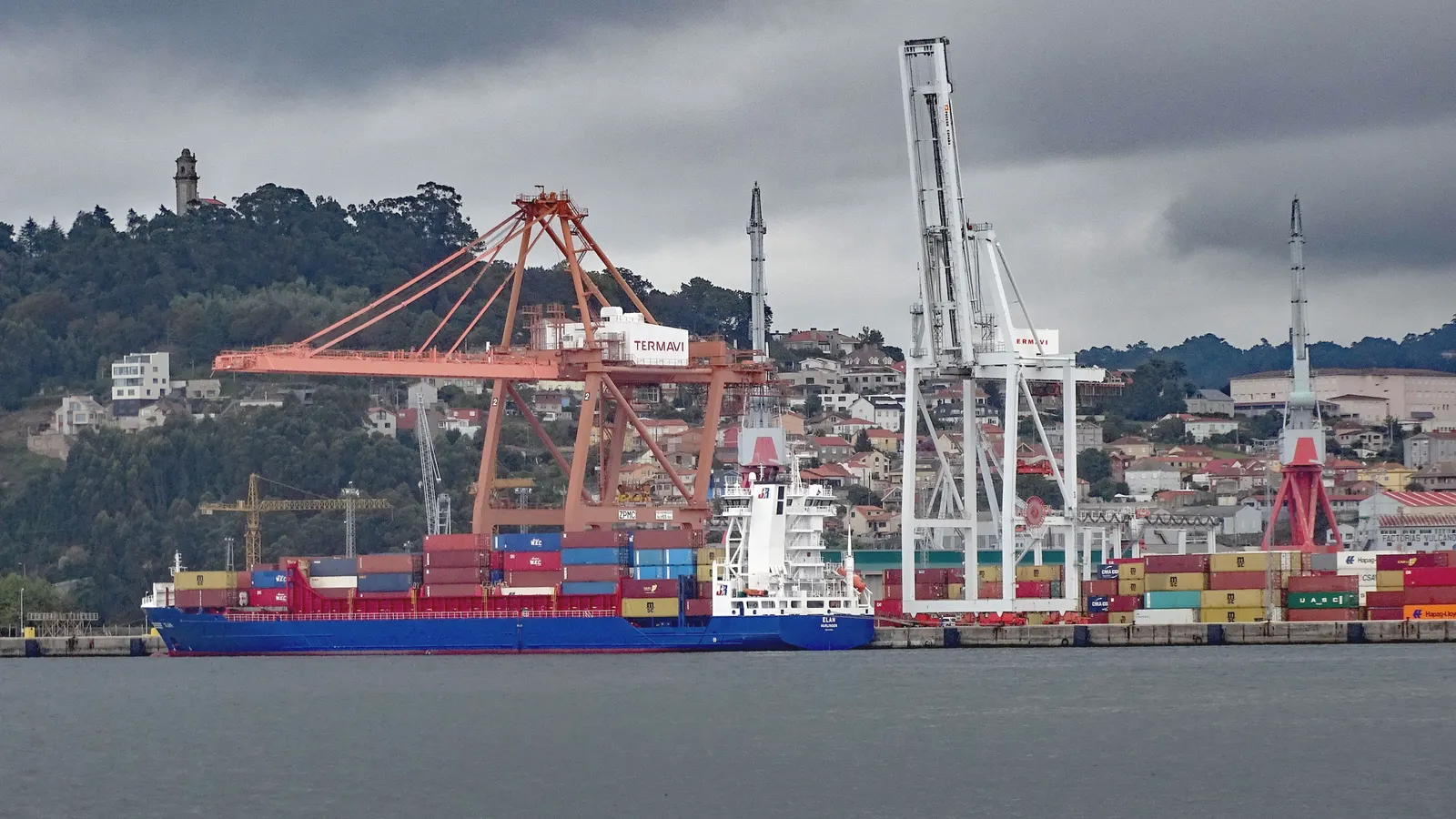
Putting several cars in one container shares a single freight charge between them. It does not share the costs that run car by car — inspection, paperwork, duty and registration — and it ties every car's arrival to the slowest one in the box.
The short version
- The saving is in freight per car, and only when the container is well filled.
- Per-car costs — inspection, duty, taxes, registration — do not fall.
- How many cars fit depends on their size and on racking; ask for a loading plan.
- One car with a document problem can hold up a whole container.
Consolidation, in one paragraph
When you buy several cars in one source market at around the same time, loading them into one container can lower the freight per car. Each car is still bought, inspected, documented, declared, taxed and registered on its own. The container moves only when it is full, so the first car bought waits for the last.
How cars are loaded and secured
- Cars are driven or winched in, chocked and strapped to lashing points in the container floor.
- Racking systems hold some cars at an angle or above others, so more fit in the same space.
- Loading is done at a depot or the port, and the container is sealed; the seal number goes on the shipping documents.
The number of cars per container depends on their dimensions and the racking. A loading plan for your specific models, from whoever loads the box, is the only reliable figure.
Where the saving comes from — and where it doesn't
| Cost | Shared by the container? |
|---|---|
| Ocean freight | Yes — one container charge divided across the cars |
| Container loading and unloading | Yes, largely |
| Terminal handling | Often per container |
| Pre-shipment inspection, cleaning | No — per car |
| Duty, excise, VAT | No — per car, on each car's value |
| Clearing agent | Sometimes reduced for one entry; check the quote |
| Approval and registration | No — per car |
The cost that does not show on a quote
A car that waits for the container to fill is capital doing nothing. If the box takes weeks to fill, the freight saving can be smaller than the cost of the money tied up in the cars already bought.
One container, several sets of paperwork
The container travels on one bill of lading, which lists every car by chassis number. Each car keeps its own invoice, export certificate and any inspection certificate, and each is classified, valued and taxed on its own at the border. A single wrong chassis number, or one car missing a certificate, can hold the release of the whole container until it is resolved — so check every car's file before the box is sealed. See the car import documents checklist.
Where will your container land?
| Country | Where cars land |
|---|---|
| Cars arrive at several UK deep-sea ports by roll-on/roll-off ship or in containers; the right port is the one with a regular sailing from your source market and the shortest run to your premises. | |
| Cars arrive at Irish ports such as Dublin by roll-on/roll-off ship or in containers; check which ports your shipping line calls at from your source market. | |
| Cars reach Malta by roll-on/roll-off ship or in containers; check which services call at Malta from your source market, as many routes tranship on the way. | |
| Cars arrive through Cyprus Ports Authority ports, chiefly Limassol. | |
| Cars for Kenya land at Mombasa, run by the Kenya Ports Authority. | |
| Cars land at Dar es Salaam, run by the Tanzania Ports Authority — which also serves cars in transit to inland neighbours. | |
| Uganda is landlocked: cars are shipped to Mombasa or Dar es Salaam and travel inland under customs transit. | |
| Cars land at Port Louis. | |
| Cars land at Kingston. | |
| Cars land at Port of Spain. | |
| Cars arrive at several New Zealand ports; choose by sailing schedule from your source market and distance to your yard. | |
| Cars land at Colombo, run by the Sri Lanka Ports Authority. |
Choose a country for its full rules and the official sources, checked 27 October 2026.
Where cars land · United Kingdom
Cars arrive at several UK deep-sea ports by roll-on/roll-off ship or in containers; the right port is the one with a regular sailing from your source market and the shortest run to your premises.
Customs clearance · United Kingdom
A shipped car must be declared by a shipping company or customs agent, and HMRC must be told it has arrived (NOVA) within 14 days.
- GOV.UK states that you must pay a shipping company or customs agent to make the import declaration for a vehicle that arrives by sea.
- Duty and VAT are paid at the border, and must be paid before the car can be registered.
- A VAT-registered company makes the NOVA notification through HMRC's online NOVA service, which accepts a spreadsheet upload for several vehicles.
Sources for United Kingdom, checked 27 October 2026:
Where cars land · Ireland
Cars arrive at Irish ports such as Dublin by roll-on/roll-off ship or in containers; check which ports your shipping line calls at from your source market.
Customs clearance · Ireland
A car from outside the EU is declared to Revenue for release into free circulation, and VAT and duty are paid before customs releases it.
Sources for Ireland, checked 27 October 2026:
Where cars land · Malta
Cars reach Malta by roll-on/roll-off ship or in containers; check which services call at Malta from your source market, as many routes tranship on the way.
Customs clearance · Malta
A car from outside the EU clears Maltese customs, with duty and VAT paid, before Transport Malta will register it.
Sources for Malta, checked 27 October 2026:
Where cars land · Cyprus
Cars arrive through Cyprus Ports Authority ports, chiefly Limassol.
Customs clearance · Cyprus
Import duty and VAT are paid to Cyprus Customs at importation; a car from the UK has been a third-country import since 2021.
Sources for Cyprus, checked 27 October 2026:
- Cyprus Ports Authority — Cyprus Ports Authority
- Vehicles from countries outside the European Union — on payment of import duty and VAT — Cyprus Customs & Excise Department
- Vehicles from the United Kingdom — Cyprus Customs & Excise Department
Where cars land · Kenya
Cars for Kenya land at Mombasa, run by the Kenya Ports Authority.
Customs clearance · Kenya
KRA treats a vehicle import like other goods: it is declared, taxed on KRA's valuation and released once duties are paid.
Sources for Kenya, checked 27 October 2026:
- Kenya Ports Authority — Kenya Ports Authority
- Importation procedure for motor vehicles — Kenya Revenue Authority
- What you need to know when importing a motor vehicle — Kenya Revenue Authority
Where cars land · Tanzania
Cars land at Dar es Salaam, run by the Tanzania Ports Authority — which also serves cars in transit to inland neighbours.
Customs clearance · Tanzania
TRA assesses and collects duty, VAT and excise at the port, and releases the car once they are paid.
Sources for Tanzania, checked 27 October 2026:
Where cars land · Uganda
Uganda is landlocked: cars are shipped to Mombasa or Dar es Salaam and travel inland under customs transit.
Customs clearance · Uganda
URA clears the car, and the UNBS inspector confirms that it matches its roadworthiness certificate.
Sources for Uganda, checked 27 October 2026:
- Kenya Ports Authority — Kenya Ports Authority
- Tanzania Ports Authority — TPA
- The UNBS (Inspection and Clearance) Regulations, 2022 — Uganda National Bureau of Standards
- Uganda Revenue Authority — URA
Where cars land · Mauritius
Cars land at Port Louis.
Customs clearance · Mauritius
MRA Customs assesses excise and VAT on the car and releases it once they are paid.
Sources for Mauritius, checked 27 October 2026:
- Customs — motor vehicles — Mauritius Revenue Authority
Where cars land · Jamaica
Cars land at Kingston.
Customs clearance · Jamaica
The car clears Jamaica Customs on the strength of the Trade Board permit, which is applied for electronically through JSWIFT.
Sources for Jamaica, checked 27 October 2026:
- Port Authority of Jamaica — Port Authority of Jamaica
- Motor vehicle — general information — Trade Board Limited
- Pre-shipment inspection criteria (February 2023) — Trade Board Limited
Where cars land · Trinidad and Tobago
Cars land at Port of Spain.
Customs clearance · Trinidad and Tobago
The car clears the Customs and Excise Division against the import licence.
Sources for Trinidad and Tobago, checked 27 October 2026:
- Port Authority of Trinidad and Tobago — PATT
- Customs and Excise Division — Ministry of Finance
- Trade Licence Unit — Ministry of Trade, Investment & Tourism
Where cars land · New Zealand
Cars arrive at several New Zealand ports; choose by sailing schedule from your source market and distance to your yard.
Customs clearance · New Zealand
Customs releases the car once GST is paid and biosecurity clearance is given; entry certification follows release.
Sources for New Zealand, checked 27 October 2026:
- Importing a used vehicle — NZ Transport Agency Waka Kotahi
- Fact sheet: importing goods for business or commercial use (April 2026) — New Zealand Customs Service
- Step 4: Entry certification — NZ Transport Agency Waka Kotahi
- Importing vehicles, machinery, and parts — Ministry for Primary Industries
Where cars land · Sri Lanka
Cars land at Colombo, run by the Sri Lanka Ports Authority.
Customs clearance · Sri Lanka
Sri Lanka Customs assesses duty, excise and luxury tax on the car and releases it once they are paid.
Sources for Sri Lanka, checked 27 October 2026:
- Sri Lanka Ports Authority — SLPA
- Sri Lanka Customs — Sri Lanka Customs
- Mid-Year Fiscal Position Report 2025 — Ministry of Finance, Sri Lanka
For the choice between a container and roll-on/roll-off, see RoRo versus container shipping; for the carrier, see choosing a vessel and shipping line. When you have a batch in mind, you can send a dealer inquiry. The full process is in the dealer's guide to sourcing cars overseas.