
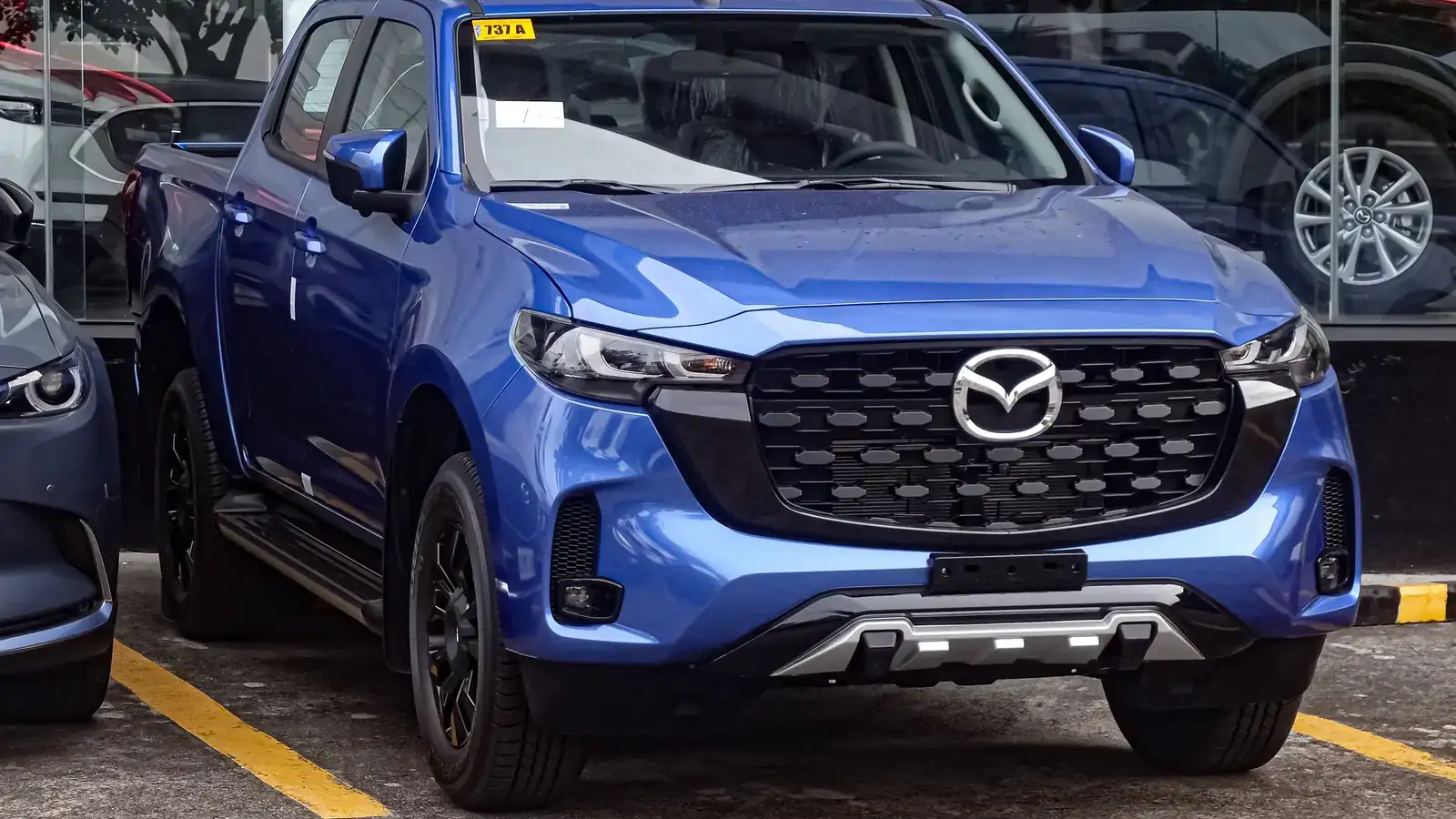
Thailand builds pickups new. Japan sells them used with an independent condition grade attached. Framed that way the comparison almost answers itself — but it is worth working through properly, because the honest answer depends on whether you are buying one vehicle or ten, and on how much verification you need before committing.
The short version
- New: Thailand, and it is not close — it is the production source.
- Used: Japan, on price and on verification.
- Fleets: Thailand, for identical units and specified accessories.
- One-off bargain hunting: Japan, for auction pricing and the grade sheet.
The headline difference
These two countries are answering different questions. Thailand is where the world’s one-tonne pickups are manufactured, so it is the natural source for a new vehicle in exactly the specification you want. Japan runs the world’s most transparent used-vehicle market, so it is the natural source for a used vehicle whose condition you can verify before bidding.
Almost everything else follows from that one distinction.
New versus used
If you want a new pickup, Thailand is the only realistic route and the saving is substantial — you are buying at the production source rather than through a destination-market distributor and dealer.
If you want a used pickup, Japan is usually cheaper. Auction pricing is wholesale rather than retail, depreciation has already done its work, and Japan’s maintenance culture means the condition of a given used example tends to be better than the mileage suggests. Thailand’s used market exists and is workable — fleet disposals in particular — but it is a retail market without an auction-grade system behind it.
Verifying condition
This is Japan’s strongest card and it deserves to be stated plainly. Every car at Japanese auction carries an inspection sheet written by an inspector employed by the auction house — an overall grade, an interior grade, and a panel-by-panel damage map — issued before anyone bids. Nothing else in our network matches it.
Thailand has no equivalent
On used Thai stock, verification is done by physical inspection rather than by reading a document. That works, and it is what our Thailand team does — but it means you are relying on somebody’s inspection rather than on an independent grade issued before the sale. On a new vehicle the question does not arise at all, which is part of why new is the default recommendation here.
How the Japanese system works is set out in Japanese auction grades explained.
Specification and equipment
Thailand wins, and for a structural reason: you are ordering rather than shopping. Cab configuration, drivetrain, engine, trim and accessory package are all choices rather than constraints, and the accessory fitment happens before the vehicle is loaded at Thai prices rather than destination-market ones.
Japan’s used pickups come as they come. The Hilux Surf and older Hilux generations that surface at Japanese auction are frequently excellent, but you take the specification that exists. Japan’s equivalent strength is in Land Cruisers and 4x4 wagons, where the used pool is deeper than Thailand’s.
Parts and aftermarket
Broadly a draw, with a twist. Both countries’ products are supported almost everywhere — a Hilux is a Hilux. The difference is the aftermarket: Thailand’s accessory industry, built around its own pickup production, is one of the deepest and cheapest in the world, and you can exploit it at source.
For an older Japanese-market vehicle, some model-specific parts can be harder to source outside Japan than the badge suggests — particularly on JDM-only variants that were never sold in your market.
Freight and lead time
| Thailand | Japan | |
|---|---|---|
| Availability | New: build slot dependent. Used: retail market. | Weekly auction cycle, very large volume. |
| Typical time to secure | New: weeks, depending on the build. | Used: often 1–3 weeks to win the right car. |
| Ports | Laem Chabang, Bangkok | Yokohama, Nagoya, Osaka, Kobe, Hakata |
| Strong routes | Asia, Oceania, East and southern Africa, Middle East | Global, with very high sailing frequency |
A pickup takes more deck space than a passenger car in both cases; container consolidation is worth pricing on multi-unit orders from either origin.
The verdict
- Buying new? Thailand. No real competition — it is the source.
- Buying used on a budget? Japan. Wholesale auction pricing plus an independent grade is a combination Thailand cannot offer.
- Buying for a fleet? Thailand. Identical units, specified accessories, factory condition — exactly what fleet operation wants, and what a used market cannot deliver at volume.
- Buying a 4x4 wagon rather than a pickup? Compare carefully. Japan’s Land Cruiser and Prado pool is deeper; Thailand’s Fortuner and MU-X are cheaper new.
- Need verification above all? Japan. The auction sheet is the best pre-purchase evidence available anywhere.
We have our own team in both, so we have no reason to push you toward one. Tell us the requirement and we compare the landed cost from each — Thailand and Japan.
Pricing, availability and lead times in both markets change continuously, and destination duty treatment of commercial vehicles varies significantly by country. Confirm the current position for your specific requirement before committing.