
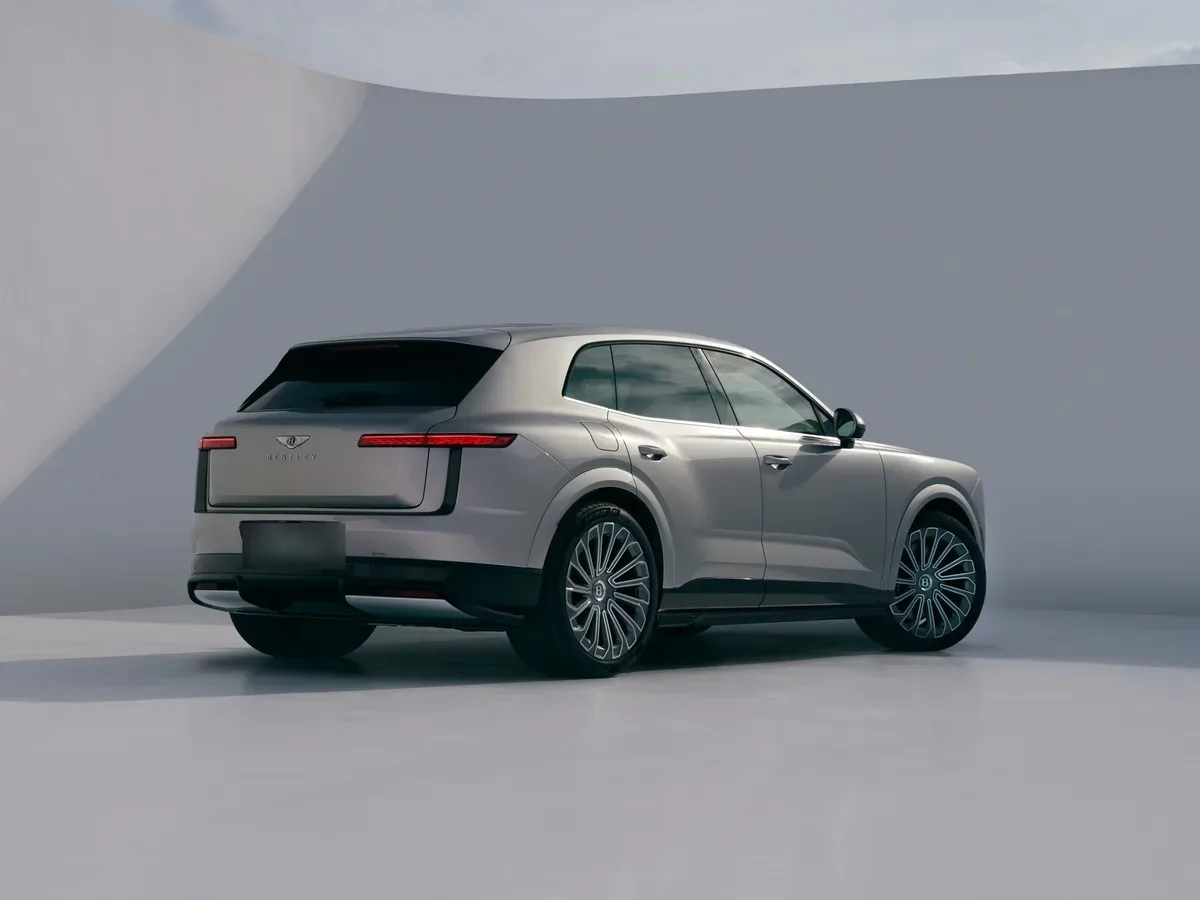
Britain revealed two electric luxury flagships in three weeks. JLR showed the Range Rover Electric on 2 September 2026 and opened order books the same day. Bentley showed the Torcal on 23 September and opened a configurator against a 2027 production start. Both are built only in the United Kingdom, both are right-hand drive as standard, and they are not aimed at the same buyer.
The short version
- Range is a dead heat. 375 miles WLTP for the Torcal against 372 for the Range Rover Electric. Three miles is not a reason to choose either car, and anyone presenting it as one is selling something.
- The Torcal charges meaningfully faster. 400 kW peak and 10 to 80 per cent in around 16 minutes, against 350 kW and around 22 minutes. Both assume a charger that can deliver it.
- The Torcal is in a different power class. 888 PS and 1,350 Nm against up to 550PS and 850 Nm — and 2.8 seconds to 60 mph against as little as 4.3.
- Only one of them can be bought today. The Range Rover Electric has been orderable since 2 September 2026. Torcal production starts in the second quarter of 2027.
- Neither has published a towing figure worth the name. JLR published none and Carscoops reports 2,500 kg; Bentley published none at all. For a buyer who tows, both cars are currently undecidable.
The two cars, side by side
Every figure in this table is the manufacturer’s own except where the row says otherwise. Where the two companies measure differently, the row says that too, because a comparison that quietly flattens two different measurements is worse than no comparison.
| Measure | Bentley Torcal | Range Rover Electric |
|---|---|---|
| Revealed | 23 September 2026, London | 2 September 2026 |
| Orderable | Configurator open; build from Q2 2027 | Order books open since reveal day |
| First deliveries | Summer 2027 (Electrifying) | Not separately published |
| Built at | Crewe, Cheshire | Solihull, West Midlands |
| Power | 821 PS / 888 PS (S) | Up to 550PS |
| Torque | 1,194 Nm / 1,350 Nm (S) | 850 Nm |
| 0–60 mph | 3.3 s / 2.8 s (S) | As little as 4.3 s |
| Top speed | 155 mph / 162 mph (S) | Not published |
| Battery | 113 kWh net, 192 pouch cells | 118.5 kWh usable, 344 prismatic cells |
| Architecture | 800 volts | 800 volts, with split charging |
| Range, WLTP | Up to 375 miles | Up to 372 miles |
| Range, real-world | Not published | Up to 333 miles (JLR's own figure) |
| Peak DC charging | 400 kW | 350 kW |
| 10–80% | Around 16 minutes | Around 22 minutes |
| Battery / propulsion warranty | 10 years or 100,000 miles | 8 years or 100,000 miles |
| Wading depth | Not published | Up to 900 mm |
| Towing | Not published | 2,500 kg reported by Carscoops; JLR published none |
| Kerb weight | Not published | Not published |
| UK price | £173,300 / £199,300 (Top Gear) | £154,070 OTR (JLR) |
888 PS
Torcal S
550PS
Range Rover Electric
375 mi
Torcal, WLTP
372 mi
Range Rover, WLTP
16 min
Torcal, 10–80%
22 min
Range Rover, 10–80%
Where the two genuinely diverge
The specification table makes them look closer than they are. Three differences actually decide between them.
One is a performance car and one is a Range Rover
888 PS against 550PS is not a trim difference. The Torcal S carries about 340PS more than the Range Rover Electric and reaches 60 mph a second and a half sooner. Bentley has also given it a fully active suspension with two-valve adaptive dampers and no anti-roll bars, and rear-wheel steering as standard. The Range Rover keeps 900 mm of wading depth and JLR’s off-road control software, neither of which Bentley has published an equivalent for. They are optimised for different roads.
JLR published a real-world range figure and Bentley did not
JLR quotes up to 372 miles WLTP and up to 333 miles on its own real-world measure — about 10 per cent below the lab number. Publishing both is unusual and worth crediting. Bentley has published one number, 375 miles WLTP, with no real-world figure beside it. On the headline the Torcal wins by three miles; on the only figure either company has published that resembles what a driver will see, there is nothing to compare it with.
On the headline the Torcal wins by three miles. On the figure a driver will actually see, only one of the two companies has published anything at all.
One exists and one does not
2 September 2026
Range Rover Electric revealed, order books open
JLR published the specification, both range figures and the £154,070 on-the-road price on the same day, and took orders from that day.23 September 2026
Bentley Torcal revealed, configurator opens
Bentley published a detailed engineering release and no price list. The configurator opened the same evening.Q2 2027
Torcal production starts
On Electrifying’s reporting. Anything ordered before this is a pre-order against a car that does not yet exist.Summer 2027
First Torcal deliveries
Bentley’s current intention rather than a commitment. Treat delivery dates on an unbuilt car accordingly.
What each one means as a sourcing decision
Both cars are built in exactly one place on earth, and both of those places are in Britain. That makes the United Kingdom the source market for each — not one option among several — and it is the single most useful thing about either announcement for a buyer outside it.
The prices are further apart than they look
JLR’s £154,070 is an on-the-road figure containing 20 per cent value added tax, the DVLA first registration fee and first-year vehicle excise duty — about £128,337.50 before tax. Bentley’s configurator returns £188,333.33 before value added tax for a right-hand-drive Torcal First Edition, checked 29 September 2026. Compared on the same basis, that is roughly £60,000 between them before any tax, freight or duty is added — a much wider gap than the headline £154,070 against £173,300 suggests.
That before-tax comparison is the one that matters on an export, because where HMRC’s conditions in VAT Notice 703 are met the British value added tax does not fall due. Those conditions are real and carry time limits and evidence requirements, so treat the tax line as conditional rather than absent. Duty, VAT and registration tax in the destination are charged to the registered owner and paid in their name.
Figures are indicative and for guidance only. Actual VRT is charged on Revenue’s OMSP and varies by model, year and mileage. Always confirm current rates and your specific case with Revenue.ie before committing to a purchase.
Both leave the same hole in a freight quotation
Neither Bentley nor JLR has published a kerb weight. Freight is quoted against weight and dimensions, so on both cars a shipping figure before the manufacturer states a weight is provisional. On the Torcal, Wikipedia records 2,700 kg and is the only source for it. We would rather flag that than quietly quote against a number we cannot stand behind.
The dealer read
For anyone committing capital rather than buying one car, four points.
- Neither has a residual history. No electric Range Rover and no electric Bentley has ever depreciated, because neither has existed. That is a risk premium on stock and it should be priced as one, not assumed away because the badges are strong.
- Days-to-turn will differ sharply. The Range Rover Electric can be bought and shipped now. The Torcal cannot be shipped until 2027, so a unit committed today is capital parked for the better part of a year before it can be invoiced on.
- The launch edition is the scarce one. First Editions are built for a period rather than to demand. If there is an allocation play in either car, it is there rather than in the core range.
- Service capability is a sales objection you will have to answer. High-voltage work is not general trade work. In a market with no electric-capable franchised facility, that question will be asked by every serious buyer, and it is better to have the answer before the stock lands.
Does this apply to you?
Buy the Torcal if you want the performance car, the faster charge and the launch specification, and you can wait until 2027. It is the more powerful car by a wide margin and the quicker to refill.
Buy the Range Rover Electric if you want the car now, if you need wading depth or any off-road capability, or if the towing figure — such as it is — matters to you. It is also roughly £60,000 cheaper before tax, which on a fleet is the whole argument.
Buy neither, yet, if your destination has no rapid charging or no electric-capable service. Both cars are excellent and both depend on infrastructure that is not evenly distributed across the right-hand-drive world. We have written the charging question up in our read on which markets a right-hand-drive Torcal actually suits, and the same test applies to the Range Rover.
What neither manufacturer has published
On the record
- Both cars’ core specifications. Power, torque, battery, architecture, WLTP range and charging rates all come from Bentley’s and JLR’s own releases.
- Both are built in exactly one plant. The Torcal at Crewe, the Range Rover Electric at Solihull with drive units from Wolverhampton.
- A price for the Range Rover Electric. £154,070 on the road, published by JLR on 2 September 2026.
- A before-tax price for the Torcal First Edition. £188,333.33 from Bentley’s configurator, checked 29 September 2026.
Still not established
- Kerb weight, on either car. Neither manufacturer has published one, and freight is quoted against it.
- Towing, on either car. JLR published none and Carscoops reports 2,500 kg. Bentley published none at all.
- A Bentley price list. The £173,300 and £199,300 figures are Top Gear’s reporting, and it is not stated whether they include value added tax — so the £60,000 before-tax gap above is calculated from Bentley’s own configurator figure, not from those.
- A real-world range figure for the Torcal. JLR publishes one; Bentley does not.
- Residual values for either. There is no history to read, for either badge, anywhere.
The one-line version
Britain now builds two electric luxury flagships: the Bentley Torcal is the faster and far more powerful car that cannot be delivered until 2027, and the Range Rover Electric is the cheaper, more capable one you can order today.
Costing either one against your own port
Both cars have a page here — the Bentley Torcal and the Range Rover Electric — each with the confirmed specification and the grade ladder, so you can register against a specification rather than a general enquiry. The United Kingdom is one of the seven countries our own team buys in. Tell us the destination port and we will build both landed figures side by side, with the VAT position and the duty line shown separately.
Sources
- The all-new Bentley Torcal makes global debut — Bentley Motors (Bentley Newsroom)
- Range Rover Electric: A New Era For The Original Luxury SUV — JLR (Range Rover Media Newsroom)
- Bentley Torcal review: price, specs, range and on-sale date — Electrifying
- The electric Range Rover costs $25,000 more than the gas one and tows a ton less — Carscoops
- Bentley Torcal revealed — loveelectric