
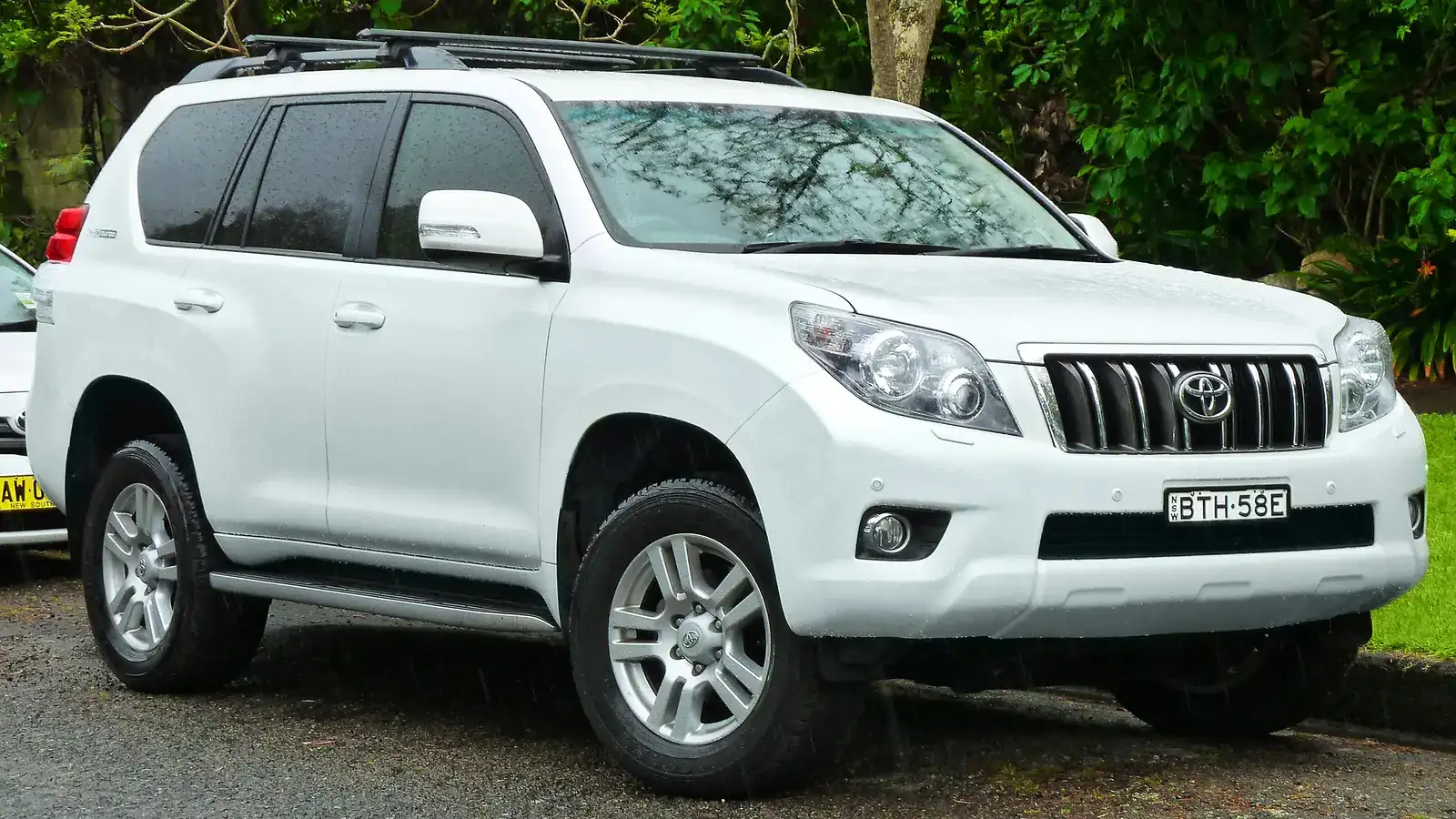
Australian imports carry a cost line that no other source country in our network does, and quotes that omit it are not quotes. The best-value 4x4s are inland; the ports are on the coast; and the gap between them can be more than a thousand kilometres of road transport. Here is the whole bill, with that line where it belongs.
The short version
- Inland transport is a real, variable line — Australia is very large.
- The biosecurity clean is small at origin and expensive at destination.
- Freight to New Zealand and the Pacific is cheap; to Europe it is not.
- No Australian export duty on used private vehicles — the tax is all at your end.
How the total is built
- The vehicle, plus a buyer’s premium if bought at trade auction.
- Checks and inspection — PPSR, registration history, physical inspection.
- Getting it to a port, which in Australia is not a rounding error.
- Cleaning, clearance and documentation.
- Freight, insurance and destination tax.
Costs inside Australia
- Purchase price. Trade auction, dealer, fleet disposal or private.
- PPSR check. Trivial in cost and the best-value spend in the entire process — it is what prevents buying a vehicle with finance owing against it.
- Physical inspection with underbody, chassis and equipment photographs.
- Inland transport — see below.
- State deregistration and plate surrender, plus proof of ownership documentation.
- Customs export declaration.
- Biosecurity steam clean and certificate.
The distance problem
Australia is roughly the size of continental Europe with a fraction of the population, and the vehicles that make Australian sourcing worthwhile are disproportionately located inland — Queensland, South Australia, Western Australia — precisely because that is where the dry climate and the touring culture are.
Moving a vehicle from inland Queensland to a coastal port can mean well over a thousand kilometres of road transport, and the cost scales with it. Two practical consequences:
- Vehicle location affects the landed price materially. Two identical utes in different states are not the same purchase.
- Any quote that omits inland transport is incomplete. Ask where the vehicle is and which port it will load from.
How we handle it
Inland transport is quoted as a specific line against the specific vehicle, not as an average. Where two comparable vehicles differ mainly in location, we tell you what that difference costs so you can decide whether the inland one is worth it. Frequently it is — the condition premium can exceed the transport.
Cleaning and inspection
The steam clean is a small fixed cost at origin and produces a certificate that travels with the vehicle. Skipping it is a false economy of the most predictable kind: New Zealand, the Pacific and many African and Asian destinations enforce biosecurity strictly, and an unclean arrival means inspection, mandatory cleaning at port rates, and days of storage while it happens.
On an Australian touring 4x4 — a vehicle that has by definition spent time somewhere dusty and probably somewhere vegetated — this is not a box-ticking exercise. We clean every vehicle before loading as standard.
Freight and insurance
The spread here is wider than for any other source country we operate, so the destination decides whether Australia makes economic sense at all:
- New Zealand and the Pacific: short, frequent, comparatively cheap. Australia is the natural source.
- South-East Asia: moderate. Competitive for the right vehicle.
- Southern and eastern Africa: moderate to high, but often still worthwhile for equipped 4x4s that are hard to source locally.
- Europe and the Americas: expensive. On an ordinary vehicle the freight can approach the purchase price, which usually makes Australia the wrong choice unless the car is one you cannot get elsewhere.
Pickups and large 4x4s take more deck space than passenger cars, so RoRo is priced accordingly. Container consolidation is worth pricing on multi-unit orders.
A worked example
Illustrative structure for an equipped touring 4x4 bought inland, RoRo to a mid-distance destination. Proportions, not a quote:
Equipped Australian touring 4x4, inland purchase, RoRo
Illustrative structure — proportions, not a quote
The inland-transport line is the distinctively Australian one, and on a vehicle sourced from a remote area it can be considerably larger than shown. The offsetting argument is in the purchase line: an already-equipped tourer includes equipment that would cost far more to fit at destination, which is the whole case for buying here rather than building one at home. That reasoning is developed in importing a ute or 4x4 from Australia.
Australia does not impose an export duty on used private vehicles as a general matter, so the Australian-side costs above are commercial rather than fiscal. The tax block is entirely at your own border.
Percentages above are illustrative of structure only and are not a quote. Inland transport varies enormously with vehicle location. Duty, tax and registration charges depend entirely on your destination and the specific vehicle, and rates change. Confirm current rates with your national customs authority before committing.