
Australia is worth shipping from in three categories, and it is the only country on earth worth shipping from in a fourth. Outside those, Japan is cheaper and better documented and you should buy there instead. Here is the honest breakdown.
The short version
- Dual-cab utes: unmatched depth of stock and trim choice.
- Touring 4x4s: already fitted with equipment worth more than it adds to the price.
- Dry-climate bodies: worth real money to salt-belt buyers.
- The monopoly: Holden and Ford Australia performance cars exist nowhere else.
Three categories, one monopoly
Australia’s value as a source is entirely a function of what its market bought and how it equipped it. The country buys 4x4 dual cabs and touring wagons at a scale that distorts the model range, accessorises them harder than anywhere else, and — in the dry inland — keeps them free of the corrosion that limits used vehicles elsewhere.
Separately, and unrelated to any of that, Australia is the sole source for a generation of large rear-drive V8 saloons that were built nowhere else.
Dual-cab utes
The HiLux, Ranger, D-Max, Triton, Navara and BT-50 sell in Australia in numbers no European market approaches. The consequences for a buyer are depth of stock, competitive pricing, and every trim level from base workhorse to fully loaded flagship actually available rather than theoretically listed.
- Toyota HiLux. The default. Broadest parts network anywhere, best resale, and an Australian-market population large enough that finding the exact configuration is realistic.
- Ford Ranger, including Raptor. The most capable and best equipped. Raptor variants in particular are hard to find used anywhere else at sensible money.
- Isuzu D-Max. The fleet operator’s choice — mechanically straightforward and economical. Ex-fleet examples are often the best-value vehicles in the market.
- Mitsubishi Triton and Mazda BT-50. The value plays. Compare on landed cost rather than assuming the badge premium reflects the machinery.
Worth noting: if you want one of these new, Thailand is the production source and will be cheaper — see the Thai guide. Australia is the used market.
Touring 4x4s, already equipped
This is the strongest argument for Australia and the one buyers most often underestimate. A well-set-up Australian tourer routinely carries tens of thousands of dollars of fitted equipment — bull bar, winch, snorkel, long-range tank, dual battery system, upgraded suspension, drawers, roof rack, recovery gear — that adds far less than that to its resale price.
The arithmetic that makes this work
Buying an already-equipped tourer is usually cheaper than buying a base vehicle and building it, often substantially. The equipment depreciates faster than it costs to fit, and somebody else absorbed that. It is the single clearest value case in Australian sourcing.
- Toyota LandCruiser 70 Series. Including the 79 dual cab. Built for exactly this and revered accordingly across Africa and the Pacific.
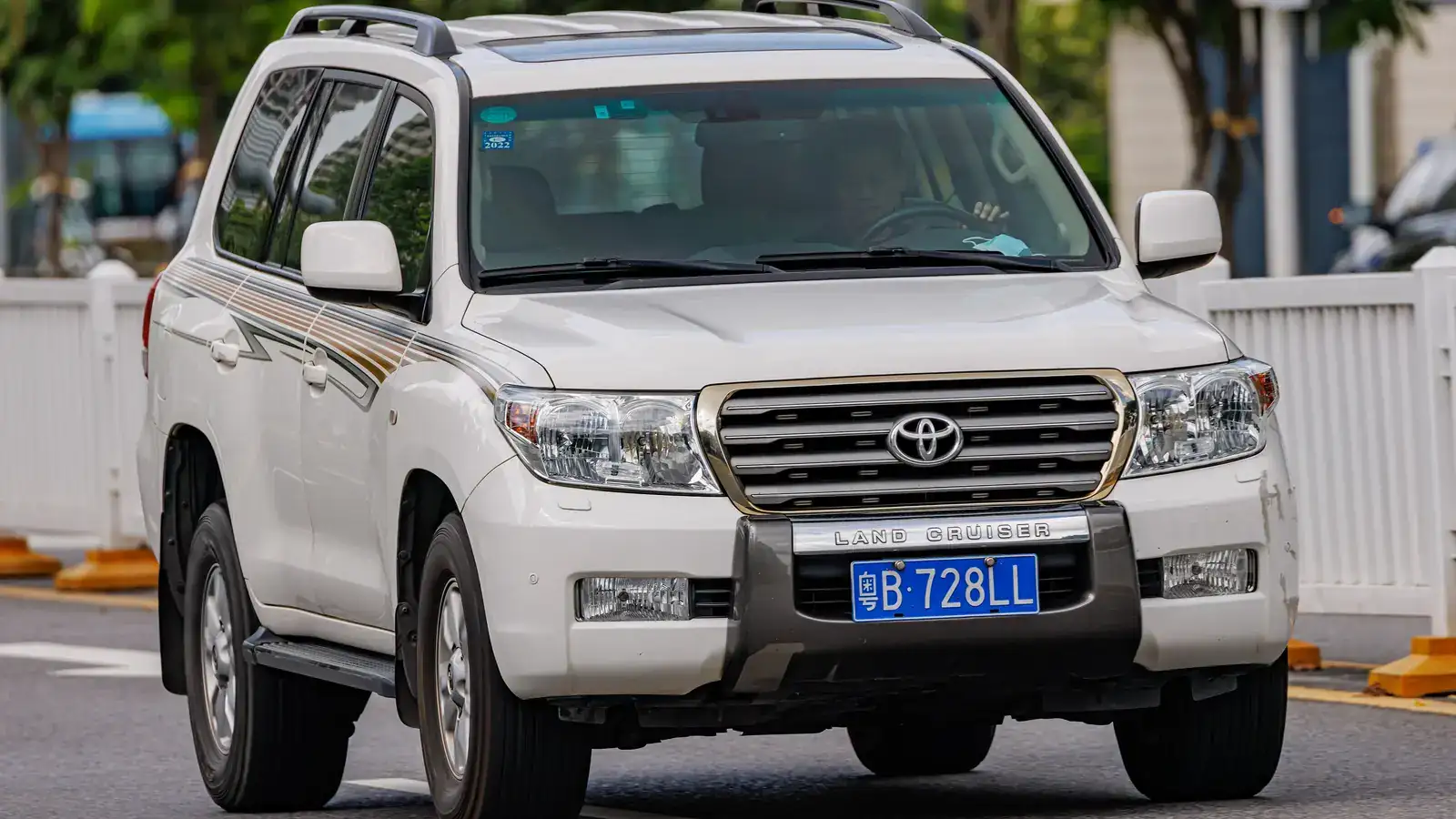
- LandCruiser 200 and 300 Series. The long-distance option, usually well maintained because of what they cost new.
- Toyota Prado. The volume touring wagon. Enormous Australian population, so choice of specification is real.
- Nissan Patrol, Y61 and Y62. The Y61 in particular has a devoted following for exactly the reasons that make it a good export.
The cars only Australia had
Holden Commodore and HSV, Ford Falcon and FPV. Large rear-drive saloons and utes, many with V8 engines, engineered in Australia for Australian conditions and never sold in this configuration anywhere else. Production ended with the plants, which means the supply is finite and shrinking.
They are becoming genuinely collectable as a result. Two cautions, though. Condition and provenance vary widely on cars of this age and this use case, so the PPSR check and physical inspection matter more here than on anything else in this article. And modified examples are common — which affects both value and whether your destination will register the car.
The dry-climate argument
For a buyer in a salt-belt country, underbody condition is worth real money, and an inland-Australian vehicle can be genuinely exceptional in that respect. No road salt and low humidity is about as favourable a combination as exists.
But be precise about the limits: coastal vehicles see salt air, northern vehicles see monsoon humidity, and “dry state” in an advert is a claim rather than a fact. That is why our inspection photographs the underbody on every vehicle instead of quoting the climate at you.
What not to buy from Australia
- Left-hand-drive vehicles. The market is right-hand drive. For LHD, look at the UAE.
- Ordinary small passenger cars. Japan is cheaper, better documented and closer to most destinations. There is no Australian advantage here at all.
- Anything where you need a pre-bid condition grade. Australia has no equivalent of the Japanese auction sheet, so verification is inspection-based rather than documentary.
- Heavily modified vehicles, without checking first. Some destinations require engineering approval for lift kits and bar work, or will not register them at all. Checkable in advance, expensive to discover late.
For the buying checklist on utes and tourers, see importing a ute or 4x4 from Australia, and for the numbers, the cost breakdown.
Market availability and pricing change continuously. Acceptance of aftermarket modifications and of vehicles carrying written-off markers varies by destination. Confirm the position for your specific vehicle and destination before committing.