
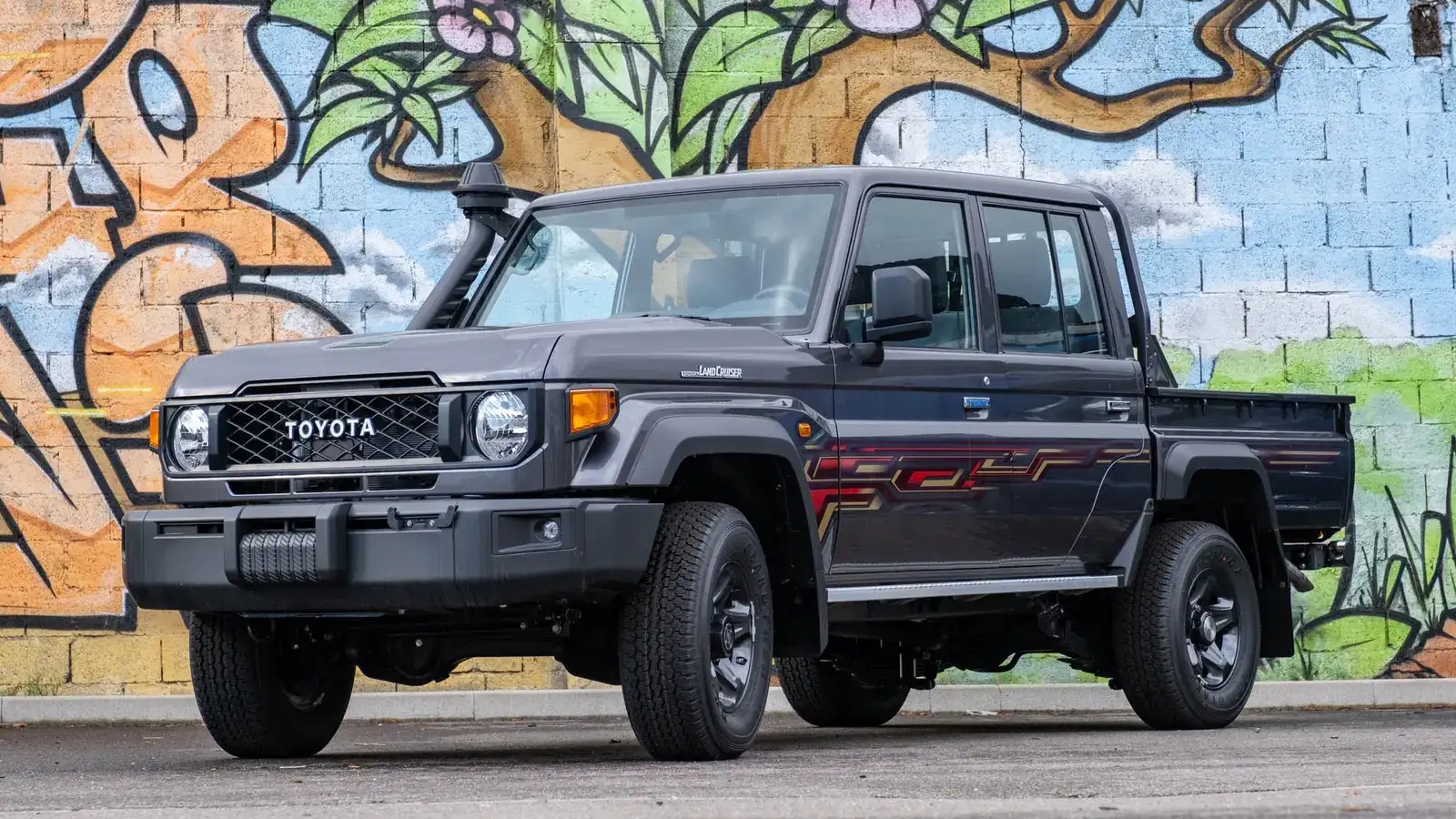
Let us start with the thing most articles on this subject avoid saying: Australia does not make cars any more. Ford stopped in 2016, Holden and Toyota in 2017. Everything sold new there today is imported. And Australia is still one of the best places on earth to buy a 4x4 — for reasons that have nothing to do with manufacturing.
The short version
- No local manufacturing since 2017. The value is specification, condition and provenance.
- The PPSR check comes first, always — finance, write-off and theft markers.
- Deregistration is state by state, not federal.
- The biosecurity steam clean is not optional for Australasian and African destinations.
Why Australia, given it builds nothing
Because of what the market has accumulated. Australians buy dual-cab utes and touring 4x4s in volumes that distort the entire model range, and they equip them harder than anyone else — bull bars, snorkels, long-range tanks, dual batteries, upgraded suspension, recovery gear, frequently fitted from new.
Add three structural advantages:
- Dry inland climates. Inland Queensland, South Australia and Western Australia are unkind to rust in a way that shows on the underbody.
- A national provenance register. Finance, write-off and stolen markers are checkable against the VIN in one query.
- Right-hand drive with English paperwork. No conversion problem and no translation problem.
And one monopoly: Holden and Ford Australia performance cars — Commodore, HSV, Falcon, FPV — were never sold in this form anywhere else on earth.
Where the stock actually is
- Trade auction houses. The main volume channel — fleet returns, lease disposals, repossessions. Competitive, fast, and variable in condition.
- Dealer networks. Better prepared and more expensive, with the service history and dealer accountability that goes with it.
- Fleet and mining disposals. Frequently the best-maintained heavy-duty 4x4s in the country, because mine-site vehicles run to enforced service schedules and retire on a timetable rather than when they break.
- Private vendors. Cheapest headline prices, most variable provenance, no recourse. Workable with a PPSR check and an inspection; unwise without either.
The PPSR check comes first
The Personal Property Securities Register is Australia’s national database of security interests. Queried against a VIN it reveals:
- Outstanding finance. If a lender holds an interest, the seller cannot pass clean title — and in some circumstances the vehicle can be repossessed from a buyer who paid in good faith.
- Written-off vehicle status, recorded by insurers.
- Stolen markers reported to police.
It costs almost nothing and it is the whole ballgame
No Australian vehicle should be bought without a PPSR check, and it should happen before the deposit rather than before the shipment. We run it on every car and reject anything that comes back flagged, full stop.
Inspection and the rust question
The dry-climate argument for Australian cars is genuine but it is not universal, and it is worth being precise about the limits. Inland regions are about as favourable to underbody condition as anywhere on earth. Coastal vehicles see salt air. Northern vehicles see monsoon humidity. A car advertised as “dry state” may have spent five years on a coastal road.
So our inspection photographs the underbody on every vehicle rather than relying on a claim about the climate. Beyond that, the checklist for a used 4x4 is specific enough to deserve its own guide — importing a ute or 4x4 from Australia covers what to look at and why.
Deregistration, state by state
Vehicle registration in Australia is administered by the states rather than federally, so the deregistration process, forms and plate-surrender requirements differ depending on where the car is registered. It is procedural rather than difficult — but it means there is no single Australian process, which is a practical argument for a buyer who has done it in each state before.
Alongside deregistration you need documented proof of ownership and the customs export declaration. The full file is in Australia car export documents explained.
The biosecurity clean
This is the step nobody warns first-time buyers about. New Zealand, the Pacific islands and many African and Asian destinations enforce strict biosecurity rules on arriving vehicles. Soil, seeds or plant material in the wheel arches, chassis rails or underbody can mean inspection, mandatory cleaning at port rates, days of delay — or refusal of entry.
A steam clean before departure costs a modest fixed sum and produces a cleaning certificate that travels with the vehicle. Doing it on arrival costs several times as much and holds up the car while it happens. On an Australian-sourced touring 4x4 — a vehicle that has by definition been somewhere dusty — this is not a formality.
For the full cost picture, including the inland-transport line that is unique to a country this size, see what it costs to import a car from Australia.
State deregistration procedures, export requirements and destination biosecurity rules change. Acceptance of aftermarket modifications varies significantly by destination and can require engineering approval. Confirm the current position for your specific vehicle and destination before committing.