
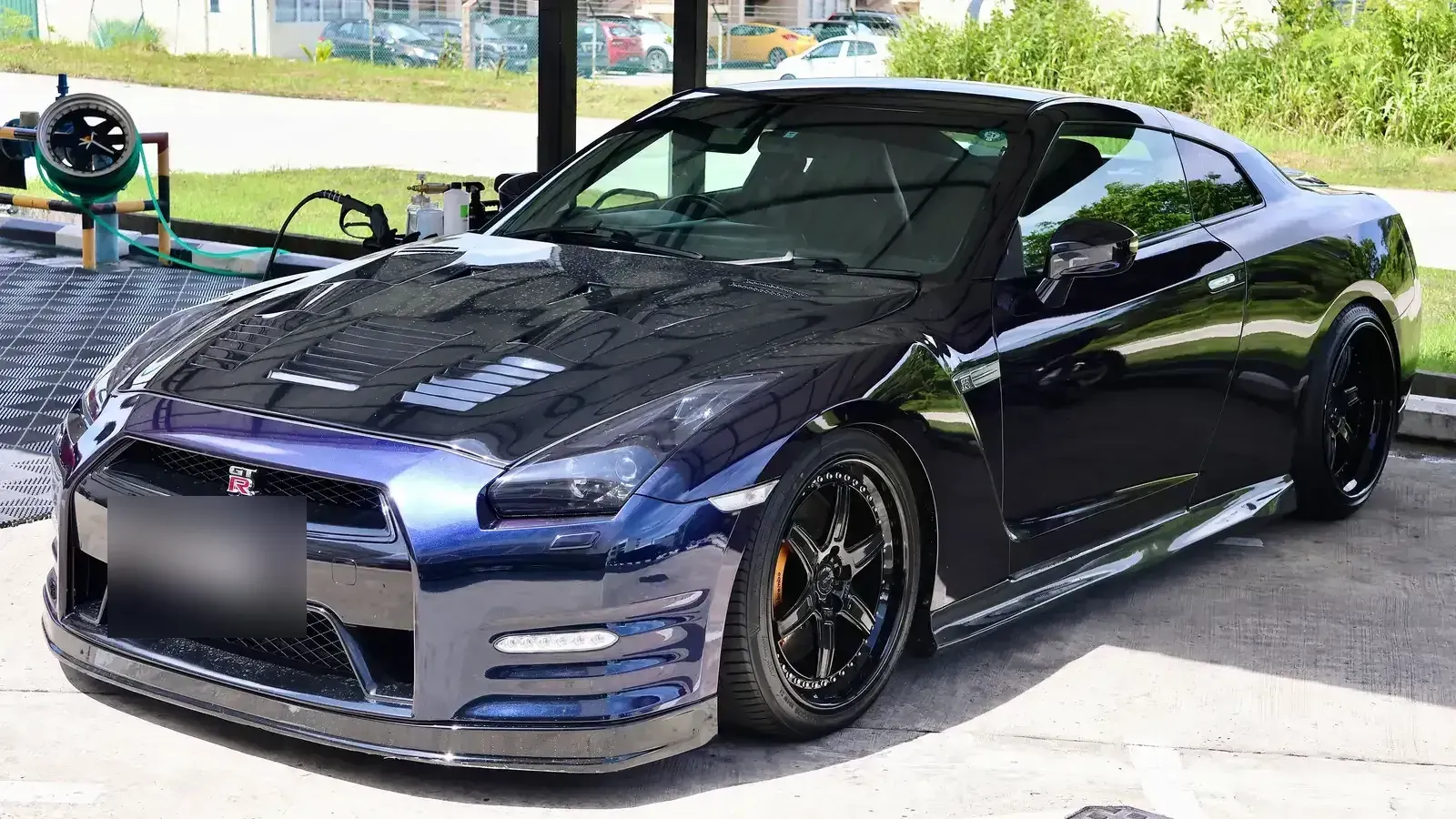
Japan publishes more about a used car than almost any other market: a written inspection report at auction, odometer readings from every statutory inspection, and an export certificate tied to that record. For a dealer, the edge in Japan is not access — it is reading what is published properly, and pricing it against your own country's rules.
The short version
- Cars are bought from dealers across Japan and at auction, where bids go through a member.
- The auction sheet, the shaken mileage record and the export certificate are your evidence.
- A trade agreement may lower duty, but origin must be proved for a used car.
- Your own country's rules decide which Japanese cars you can use.
Japan for a dealer, in one paragraph
Japan drives on the left, so its used cars are right-hand drive, and its regular inspection regime means many come to market young and well documented. A dealer buys from Japanese dealers or through an auction member, reads the sheet and the mileage record, and has the car deregistered for export. The car then ships under your terms of sale and is imported under your country's rules and taxes, which decide whether a given car makes sense at all.
How cars are bought in Japan
- From dealers. Japanese used-car dealers sell stock that can be inspected and reserved, at a fixed price.
- At auction. The graded auctions admit registered members; an overseas dealer bids through one up to a set maximum. The process is in how to import a car from a Japanese auction and buying cars at overseas auctions.
What Japan tells you about a car
| Evidence | What it shows | Where to read more |
|---|---|---|
| Auction sheet | Overall and interior grade, body diagram of damage and repairs, notes | Auction grades explained |
| Shaken record | Odometer readings at each statutory inspection, via AIRIA | Checking mileage |
| Export certificate | Deregistration for export, with a reference that links to the inspection record | Japan export documents |
Japan's Ministry of Land, Infrastructure, Transport and Tourism sets the statutory inspection at three years for a new private car and two years after that, so a Japanese car's mileage record has regular readings. That regime is a reason Japanese cars tend to be maintained; it is not a guarantee of any one car's condition, which is why the sheet and an independent check still matter.
Export: deregistration and the certificate
Before shipping, the car is deregistered for export and an export certificate is issued. Many destination registration authorities treat that certificate as the car's original foreign registration, so its chassis number, dates and details must match the invoice and bill of lading exactly. Where your country requires a pre-shipment inspection, it is carried out in Japan before loading — see pre-shipment inspection for used cars. For New Zealand, cars from Japan go through an MPI-approved biosecurity system there.
Japan into your country
| Country | Source markets that fit |
|---|---|
| The UK drives on the left and sets no age limit, so every right-hand-drive source market is open; the trade-offs are duty origin and vehicle approval. | |
| Ireland drives on the left, so right-hand-drive markets fit; the deciding numbers are duty origin and VRT on the Irish OMSP. | |
| Malta drives on the left, so right-hand-drive markets fit; for non-EU stock, the SVA certificate and the five-year minimum-tax line shape the buy. | |
| Cyprus drives on the left, sets no age limit and charges no excise on cars, so right-hand-drive stock from Japan and the UK fits; duty and VAT are the main costs. | |
| Kenya needs right-hand drive, under eight years old and a pre-export inspection, so it fits markets with right-hand-drive stock and a KEBS-appointed inspector. | |
| Tanzania has no age ban but taxes age heavily, so the best-fitting stock is right-hand drive and under eight years old. | |
| Uganda's fifteen-year ceiling leaves room for older stock than Kenya allows, but the pre-export certificate still decides which markets work. | |
| Engine-capacity bands make small-engined and electric cars the efficient buy, and the valuation rule rewards cars from Japan that MRA can value from its own system. | |
| The six-year limit and the pre-shipment inspection list point a dealer to young right-hand-drive stock from Japan or the UK. | |
| The licence is written for used right-hand-drive vehicles, so Japan and the UK are the natural markets; the age limit decides how far back you can buy. | |
| Japan is the natural source: its exports run through an MPI-approved biosecurity system and can be border-inspected before they sail. | |
| Right-hand drive and young stock: the age lines in the tariff make a car under three years old a different tax proposition from an older one. |
Choose a country for its full rules and the official sources, checked 27 October 2026.
Source markets that fit · United Kingdom
The UK drives on the left and sets no age limit, so every right-hand-drive source market is open; the trade-offs are duty origin and vehicle approval.
- Japan, the United Kingdom, Thailand, India, Australia and New Zealand all drive on the left, so their domestic stock is right-hand drive. The UAE drives on the right, so its domestic stock is left-hand drive.
- Under-10-year-old stock needs vehicle approval in the UK, which adds time and test fees per car; 10-year-old and older stock skips it.
- A preferential duty rate depends on proving the car's origin, which is hard for a used car — so price a used import at the 10% third-country rate unless the origin evidence is in hand.
Duty and taxes · United Kingdom
The UK charges customs duty, then 20% import VAT on a value that already includes the duty.
- Third-country duty on a used passenger car is 10% (UK tariff, commodity 8703 23 90 00).
- A car that originates in a partner country can enter at a preferential rate — Japan's reached 0% on 1 February 2026 — but only on an origin claim the importer can evidence. Japan Customs warns that a used car qualifies only if it can be proved originating when built, and that its manufacturer is not obliged to supply that proof.
- A VAT-registered business can reclaim import VAT, or account for it on its VAT return through postponed VAT accounting instead of paying it at the border.
- A dealer cannot use the VAT margin scheme on a car it imports itself, so VAT is charged on the full selling price when the car is sold.
Sources for United Kingdom, checked 27 October 2026:
- Vehicle approval — GOV.UK (DVSA)
- Commodity 8703 23 90 00 — used passenger cars, 1,500–3,000cc — UK Integrated Online Tariff
- Application of the Japan–EU and Japan–UK rules of origin to used goods (leaflet) — Japan Customs
- Check when you can account for import VAT on your VAT Return — HMRC
- Check if you can use a VAT margin scheme if you import from, or export to, countries outside the UK — HMRC
Source markets that fit · Ireland
Ireland drives on the left, so right-hand-drive markets fit; the deciding numbers are duty origin and VRT on the Irish OMSP.
- Japan, the United Kingdom, Thailand, India, Australia and New Zealand all drive on the left, so their domestic stock is right-hand drive. The UAE drives on the right, so its domestic stock is left-hand drive.
- A car from Great Britain is a third-country import since 2021 and pays customs duty unless it qualifies for preferential origin.
- VRT is set by the Irish market value, so the gain from importing is usually in the car's condition and specification rather than in the tax.
Duty and taxes · Ireland
A car from outside the EU pays customs duty, then 23% import VAT, then Vehicle Registration Tax (VRT) on registration.
- Revenue's guidance on cars from Great Britain applies customs duty of 10% on the customs value of a car that does not qualify for preferential origin.
- Import VAT is charged at the standard rate, 23%, on the customs value plus the duty, and must be paid before the car is released from customs control.
- VRT is calculated on the car's Open Market Selling Price (OMSP) in Ireland, not on the price you paid for it.
- Revenue notes that customs duty cannot be recovered, even by a VAT-registered trader.
- Japan-built cars can qualify for 0% duty under the EU–Japan agreement, but Japan Customs warns that a used car qualifies only if its origin when built can be proved.
Sources for Ireland, checked 27 October 2026:
- VAT implications of importing vehicles from Great Britain and Northern Ireland — Revenue
- Vehicle Registration Tax — Revenue
- Tax and Duty Manual: VAT and VRT on transactions involving motor vehicles — Revenue
- Application of the Japan–EU and Japan–UK rules of origin to used goods (leaflet) — Japan Customs
Source markets that fit · Malta
Malta drives on the left, so right-hand-drive markets fit; for non-EU stock, the SVA certificate and the five-year minimum-tax line shape the buy.
- Japan, the United Kingdom, Thailand, India, Australia and New Zealand all drive on the left, so their domestic stock is right-hand drive. The UAE drives on the right, so its domestic stock is left-hand drive.
- Keeping non-EU stock at five years old or younger avoids the minimum registration tax.
Duty and taxes · Malta
Malta charges a registration tax set by the car's CO₂ emissions and length, plus customs duty and VAT on a car imported from outside the EU.
- For a passenger car (category M1), Transport Malta calculates registration tax from the CO₂ figure, the registration value and the vehicle's length.
- A minimum registration tax applies to a used car imported from outside the EU that is more than five years old, counted from the year of manufacture; electric cars and plug-in hybrids with more than 50 km of electric range are exempt from that minimum.
- Since 1 January 2021 a car from the UK is a third-country import, and customs duty and VAT apply.
Sources for Malta, checked 27 October 2026:
Source markets that fit · Cyprus
Cyprus drives on the left, sets no age limit and charges no excise on cars, so right-hand-drive stock from Japan and the UK fits; duty and VAT are the main costs.
- Japan, the United Kingdom, Thailand, India, Australia and New Zealand all drive on the left, so their domestic stock is right-hand drive. The UAE drives on the right, so its domestic stock is left-hand drive.
Duty and taxes · Cyprus
A car from outside the EU pays 10% import duty and then 19% VAT on the customs value plus the duty.
- Cyprus Customs states that, from 22 March 2019, no excise duty is imposed on motor vehicles imported into Cyprus.
- Road tax after registration is set by the car's CO₂ emissions.
Sources for Cyprus, checked 27 October 2026:
- Vehicles from countries outside the European Union — on payment of import duty and VAT — Cyprus Customs & Excise Department
- Excise duties — general information — Cyprus Customs & Excise Department
- Running and growing your business — registering a vehicle — Business in Cyprus (Government of Cyprus)
Source markets that fit · Kenya
Kenya needs right-hand drive, under eight years old and a pre-export inspection, so it fits markets with right-hand-drive stock and a KEBS-appointed inspector.
- Japan, the United Kingdom, Thailand, India, Australia and New Zealand all drive on the left, so their domestic stock is right-hand drive. The UAE drives on the right, so its domestic stock is left-hand drive.
- Left-hand-drive stock from the UAE does not qualify.
- The age cut-off moves every year, so buy stock with room to spare: a car that clears the line when bought must still clear it when it lands.
Duty and taxes · Kenya
Kenya charges import duty, excise duty, 16% VAT, an Import Declaration Fee and the Railway Development Levy, all based on the customs value.
- KRA's own procedure page lists import duty at 25%, the Import Declaration Fee at 3.5% and the Railway Development Levy at 2%; press reporting since 2024 puts import duty at 35% following an East African Community tariff revision. Confirm the rate in force with KRA before pricing a car.
- Excise duty depends on fuel and engine size: KRA lists 20% for a 1,000–1,500cc petrol engine, 25% for 1,500–3,000cc petrol and for hybrids, 35% above 3,000cc petrol or 2,500cc diesel, and 10% for a fully electric car.
- VAT at 16% is charged on a value that includes the duty and excise.
Sources for Kenya, checked 27 October 2026:
- Importation procedure for motor vehicles — Kenya Revenue Authority
- KEBS: only newer vehicles to be allowed (report of the KEBS notice of 17 November 2025) — Business Today (press report of the official notice)
- A breakdown of vehicle importing charges and taxes — The Standard (press report of the official notice)
Source markets that fit · Tanzania
Tanzania has no age ban but taxes age heavily, so the best-fitting stock is right-hand drive and under eight years old.
- Japan, the United Kingdom, Thailand, India, Australia and New Zealand all drive on the left, so their domestic stock is right-hand drive. The UAE drives on the right, so its domestic stock is left-hand drive.
Duty and taxes · Tanzania
Tanzania charges import duty, VAT and excise duty, with extra excise on a used car that rises with its age.
- The Finance Act 2026, in force from 1 July 2026, sets the age excise on imported used vehicles at 18% for eight to ten years old, 35% for over ten up to twenty years, and 40% for over twenty years.
- The Citizen reports that the same Act brought engines of 1,000cc or less, previously exempt, into excise at 5%.
Sources for Tanzania, checked 27 October 2026:
- The Finance Act, 2026 — Tanzania Revenue Authority
- Importing a used car now costs more as Finance Act takes effect — The Citizen (press report of the official notice)
Source markets that fit · Uganda
Uganda's fifteen-year ceiling leaves room for older stock than Kenya allows, but the pre-export certificate still decides which markets work.
- Japan, the United Kingdom, Thailand, India, Australia and New Zealand all drive on the left, so their domestic stock is right-hand drive. The UAE drives on the right, so its domestic stock is left-hand drive.
Duty and taxes · Uganda
The Uganda Revenue Authority assesses import duty, VAT and other levies at entry; confirm the rates for your exact vehicle with URA, as they are set in each year's finance measures.
Sources for Uganda, checked 27 October 2026:
- Report on the Traffic and Road Safety (Amendment) Bill, 2026 — Parliament of Uganda
- Notice on certificates of roadworthiness for used motor vehicles — Uganda National Bureau of Standards
- Uganda Revenue Authority — URA
Source markets that fit · Mauritius
Engine-capacity bands make small-engined and electric cars the efficient buy, and the valuation rule rewards cars from Japan that MRA can value from its own system.
- Japan, the United Kingdom, Thailand, India, Australia and New Zealand all drive on the left, so their domestic stock is right-hand drive. The UAE drives on the right, so its domestic stock is left-hand drive.
Duty and taxes · Mauritius
Mauritius charges excise duty set by engine capacity (or by power for an electric car), plus 15% VAT.
- MRA's motor-vehicles page runs from 0% excise for a combustion car up to 550cc to 100% above 2,000cc, and taxes electric cars by power rating at 15% or 25%.
- MRA's older duty-calculation guide shows different engine bands for the same category. Confirm the bands in force with MRA before you price a car.
Sources for Mauritius, checked 27 October 2026:
- Customs — motor vehicles — Mauritius Revenue Authority
- How to calculate duty and taxes payable on vehicles — Mauritius Revenue Authority
Source markets that fit · Jamaica
The six-year limit and the pre-shipment inspection list point a dealer to young right-hand-drive stock from Japan or the UK.
- Japan, the United Kingdom, Thailand, India, Australia and New Zealand all drive on the left, so their domestic stock is right-hand drive. The UAE drives on the right, so its domestic stock is left-hand drive.
Duty and taxes · Jamaica
Jamaica Customs assesses duty and taxes on an imported car; confirm the rates for your exact vehicle with the Jamaica Customs Agency before you price it.
Sources for Jamaica, checked 27 October 2026:
- Motor vehicle — general information — Trade Board Limited
- Pre-shipment inspection criteria (February 2023) — Trade Board Limited
Source markets that fit · Trinidad and Tobago
The licence is written for used right-hand-drive vehicles, so Japan and the UK are the natural markets; the age limit decides how far back you can buy.
- Japan, the United Kingdom, Thailand, India, Australia and New Zealand all drive on the left, so their domestic stock is right-hand drive. The UAE drives on the right, so its domestic stock is left-hand drive.
Duty and taxes · Trinidad and Tobago
The Customs and Excise Division assesses duty and taxes on an imported car; check the Ministry of Trade's budget measures on motor vehicles for the rates in force.
Sources for Trinidad and Tobago, checked 27 October 2026:
- Declaration for licence to import a used right-hand-drive vehicle — Ministry of Trade, Investment & Tourism
- Trade Licence Unit — Ministry of Trade, Investment & Tourism
- Customs and Excise Division — Ministry of Finance
- Budget measures on motor vehicles (used and new) — Ministry of Trade, Investment & Tourism
Source markets that fit · New Zealand
Japan is the natural source: its exports run through an MPI-approved biosecurity system and can be border-inspected before they sail.
- Japan, the United Kingdom, Thailand, India, Australia and New Zealand all drive on the left, so their domestic stock is right-hand drive. The UAE drives on the right, so its domestic stock is left-hand drive.
Duty and taxes · New Zealand
GST at 15% is charged on the New Zealand value of the car plus any duty payable, freight and insurance.
Sources for New Zealand, checked 27 October 2026:
- Step 3: Border inspection — NZ Transport Agency Waka Kotahi
- Importing vehicles, machinery, and parts — Ministry for Primary Industries
- Fact sheet: importing goods for business or commercial use (April 2026) — New Zealand Customs Service
Source markets that fit · Sri Lanka
Right-hand drive and young stock: the age lines in the tariff make a car under three years old a different tax proposition from an older one.
- Japan, the United Kingdom, Thailand, India, Australia and New Zealand all drive on the left, so their domestic stock is right-hand drive. The UAE drives on the right, so its domestic stock is left-hand drive.
Duty and taxes · Sri Lanka
Sri Lanka charges customs import duty, excise duty and luxury tax on vehicles, and the rates change often — the Customs tariff for the month of import is the only safe figure.
- A 20% customs import duty on motor vehicles took effect on 28 January 2025, and Gazette 2421/43 added a 50% surcharge on that duty from 1 February 2025 for one year. Check with Sri Lanka Customs whether the surcharge was renewed.
- The Customs tariff carries separate lines for many cars by age, such as 'not more than three years old' and 'more than three years old'.
Sources for Sri Lanka, checked 27 October 2026:
- National Imports Tariff Guide 2025 — Chapter 87 — Sri Lanka Customs
- Importation of a used motor vehicle under import control licence — Department of Import and Export Control
- Mid-Year Fiscal Position Report 2025 — Ministry of Finance, Sri Lanka
- Gazette Notification No. 2421/43 (31 January 2025) — customs surcharge — Ministry of Finance, Sri Lanka
The origin question
The UK–Japan and EU–Japan agreements can reduce duty on cars that originate in Japan. Japan Customs warns that a used car qualifies only if it can be proved originating when it was built, and that the manufacturer has no obligation to provide that proof. Price a used Japanese car at the standard rate unless the origin evidence is in hand.
Duty and tax rules change. The country section cites each authority and the date it was checked; confirm the rate for your exact car before you commit.
The risks to price in
- The yen. Cars are priced in yen; your cost and the duty move with it. See currency risk for car importers.
- Grade versus reality. A grade summarises; it does not replace reading the diagram and notes.
- Underbody corrosion. De-icing salt is used on roads in Japan's snowy regions, so check the underbody of cars from those areas.
- Your age rule. Japanese stock is plentiful at every age; filter by your rule first — age limits by country.
For the UK specifically, the guide for UK dealers importing Japanese cars covers HMRC, DVSA and DVLA in depth. When you know the cars you want from Japan, you can send a dealer inquiry. To compare Japan with other markets, see the best country to import cars from, and for the whole process, the dealer's guide to sourcing cars overseas.