
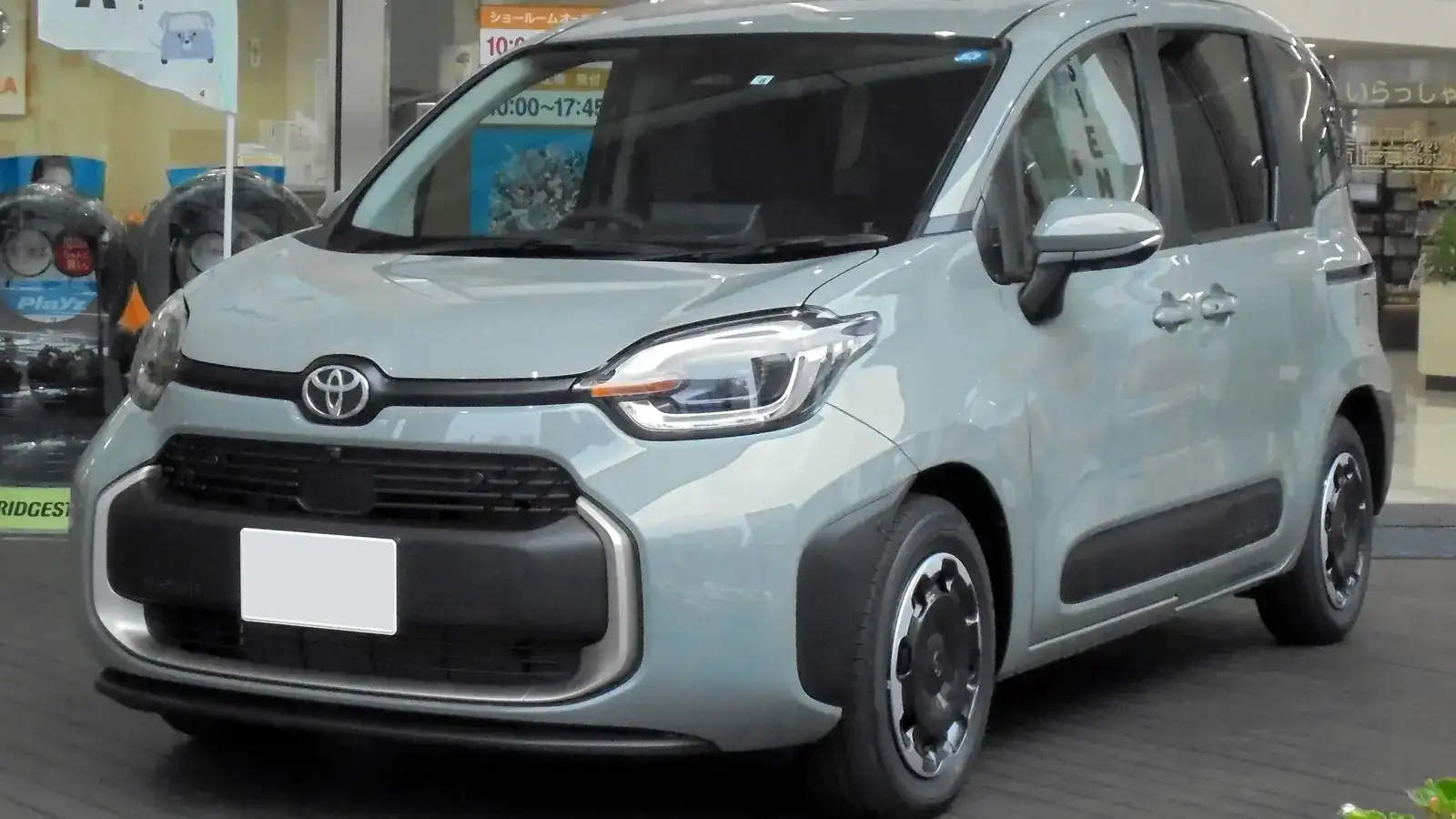
A Japanese car imported to the UK pays 10% customs duty, or nothing at all if it can be shown to originate in Japan — and then 20% VAT on top of whichever it is. The zero rate is real and recent. But on a used car it is not a property of the car; it is a claim, made on paper, that someone has to be able to prove. That difference decides more about your duty bill than the rate itself.
The short version
- Third-country duty on a used car: 10%. Japan preference: 0% since 1 February 2026, after 2.5% and 1.3%.
- The importer is responsible for the claim, and HMRC may check it after the car is released.
- Japan Customs warns a used car qualifies only if it was originating when built new — and the manufacturer need not supply the proof.
- VAT is 20% of the value plus the duty. VAT-registered businesses reclaim it; private buyers do not.
- A collectors’ vehicle at least 30 years old in original state pays 0% duty and an effective 5% VAT.
Is there import duty on a Japanese car in the UK?
Yes, at 10%, unless the import declaration claims the UK–Japan preference and the claim stands. The preference has been 0% since 1 February 2026. Import VAT at 20% is then charged on the customs value plus the duty, and must be paid before the DVLA will register the car.
The duty rates in force, and how they got there
The UK Tariff lists used petrol cars of 1,000–3,000cc under commodity codes 8703 22 90 00 and 8703 23 90 00. On 7 October 2026 both showed a 10% third-country rate and 20% VAT. The Japan preference, set by the Customs Tariff (Preferential Trade Arrangements) (EU Exit) Regulations 2020, was stepped down to zero rather than removed at once:
| Period | Japan preference | Without preference |
|---|---|---|
| 1 Feb 2024 – 31 Jan 2025 | 2.5% | 10% |
| 1 Feb 2025 – 31 Jan 2026 | 1.3% | 10% |
| From 1 Feb 2026 | 0% | 10% |
Source: UK Integrated Online Tariff, commodity 8703 23 90 00, queried 7 October 2026 including historic dates.
Japan is also a member of the CPTPP trade agreement, which shows a 2% rate for the second half of 2026 on the same codes. Where a CEPA claim can be made, it is the better one.
A 0% line on the tariff that does not apply to cars
The same commodity pages show an “autonomous tariff suspension” at 0% for all origins until the end of 2028. It is not a duty holiday on used cars: its footnote reads “This suspension only applies to ambulances falling under this code.” Anyone quoting it as a 0% route for a car has read the line without the footnote.
What the 0% duty rate actually requires
The rules are in Chapter 3 of the UK–Japan Comprehensive Economic Partnership Agreement, and they put the weight in a particular place.
- The importer makes the claim, and owns it. Article 3.16 says the importer “shall be responsible for the correctness of the claim”. The claim rests on either a statement on origin made out by the exporter, or the importer’s own knowledge.
- The statement on origin is the exporter’s. Article 3.17: it is made out on the invoice or another commercial document, on the basis of information showing the product is originating, and the exporter is responsible for it.
- Records are kept for years. Article 3.19: the importer keeps the statement for at least three years; the exporter keeps it, and the evidence behind it, for at least four.
- HMRC can check after release. Articles 3.21 and 3.24: verification can happen after the car has cleared customs, and preference can be denied if the information is not provided within three months or does not confirm origin.
“Originating” for a car is a manufacturing test. The agreement’s product-specific rule for heading 87.03 settles, from its sixth year, at a maximum of 45% non-originating materials by ex-works price, or a regional value content of 60% by free-on-board value. That is information about how the car was built, held by the company that built it.
The importer’s-knowledge route does not get round this. HMRC’s guidance on it lists the information an importer may need — the production process, the value of non-originating materials and so on — which is exactly what a private buyer of a used car does not have.
The used-car problem Japan Customs warns about
Japan Customs publishes a warning leaflet on the Japan–EU and Japan–UK agreements and used goods, and its first worked example is a used passenger car. Its position, in summary:
- A used product is originating only if it was originating when produced new and has not lost that status in use — and this has to be proved.
- There have been cases where preference was claimed on used goods without that proof. Where it cannot be proved, the preferential rate cannot be used.
- The example evidence is a document from the car’s manufacturer showing the new car met the value rule.
- The manufacturer has no obligation to supply that evidence, even when a used-goods exporter or importer asks for it.
Japan’s Ministry of Finance and Japan Customs repeated the point at an exporters’ seminar on 24 June 2026: if origin cannot be proved, the EPA rate may be denied. None of this makes 0% impossible on a used Japanese car. It makes it a question to ask before you import, rather than an assumption to discover was wrong after an HMRC letter.
A Japanese badge is not Japanese origin
The rule follows the factory. A Japanese-brand model assembled outside Japan does not originate in Japan under the agreement, however it was sold or registered there. Check where the specific car was built — the chassis number and the manufacturer’s plate are the start — before pricing it at 0%.
VAT, and the value it is charged on
GOV.UK says import VAT is charged on the total cost of the vehicle plus any accessories bought with it, delivery and extra charges, and the customs duty. HMRC’s valuation guidance adds that transport costs to the UK border form part of the value. So the order is: value, then duty on the value, then VAT on value plus duty.
Duty and VAT on a £10,000 customs value
Illustrative. The car, freight and insurance to the UK border.
A VAT-registered importer can reclaim the import VAT on its next return, or account for it on that return instead of paying it at the border — postponed VAT accounting. For a private buyer the VAT is a cost. Either way, GOV.UK is clear that it must be paid before the car can be registered.
The exchange rate HMRC uses on a yen invoice
A yen price has to become a sterling value before duty and VAT can be worked out, and HMRC does not use the rate on your banking app. It publishes a monthly rate, taken at midday the day before publication, for use throughout the following month.
| Month | HMRC rate, yen per £1 | ¥1,500,000 in sterling |
|---|---|---|
| September 2026 | 215.6954 | £6,954.25 |
| October 2026 | 208.5932 | £7,191.03 |
Source: HMRC monthly exchange rates, UK Integrated Online Tariff. October's rate was published 16 September 2026. Sterling values are our arithmetic.
Between those two months the yen strengthened against sterling, so the same yen invoice converts to £236.78 more, and duty and VAT follow it up. We report rates; we do not forecast them. For how currency moves reach a landed cost, see why the rate on your duty bill is not the rate on your banking app.
Reliefs: classic cars, people moving home and businesses
Collectors’ vehicles, 30 years and older
The UK Tariff’s additional note to Chapter 97 classes a motor vehicle as a collectors’ piece under heading 9705 when it is in its original state, with no substantial changes to the chassis, body, steering, braking, transmission or suspension, engine or wings; is at least 30 years old; and is of a model no longer in production. Modernised or modified cars are excluded. The tariff shows 0% duty on heading 9705, and HMRC’s valuation rules reduce the VAT value to 25%, for an effective rate of 5%. HMRC’s own advice is to email its Tariff Classification Service before making a purchase.
Transfer of residence
Someone making the UK their main home can import their own car free of duty and VAT if they have lived outside the UK for at least 12 consecutive months, owned and used the car for at least six months before moving, and import it within 12 months of arriving. HMRC must approve the claim first on form ToR1, and the car cannot be sold, lent or hired out for 12 months.
VAT-registered businesses
A business importing a car for its business recovers the import VAT under the normal input-tax rules, and needs no approval to use postponed VAT accounting. A dealer’s position is set out in importing Japanese cars to sell in the UK.
What to ask before you import a car from Japan
- Where was this car built? Not the brand — the factory.
- Will the exporter make out a statement on origin, and on what evidence from the manufacturer? If the answer is vague, price the car at 10%.
- Can you keep the statement for three years? It is your claim if HMRC asks.
- Does the customs value include freight and insurance? It should, or the VAT figure is wrong.
- Is it a 30-year classic? Ask HMRC’s Tariff Classification Service before you pay, not after.
When you have the car, you can import a Japanese car to the UK with the duty and VAT calculated for that exact car before you commit.
Duty, VAT and origin rules on this page were checked on 7 October 2026 against the UK Integrated Online Tariff, GOV.UK guidance from HMRC, the text of the UK–Japan Comprehensive Economic Partnership Agreement (Chapter 3 and Annex 3-B), HMRC’s guidance on importer’s knowledge, and Japan Customs’ leaflet on used goods. Whether a particular car qualifies for preference depends on evidence about that car. Confirm your case with HMRC before committing to a purchase: gov.uk/importing-vehicles-into-the-uk.